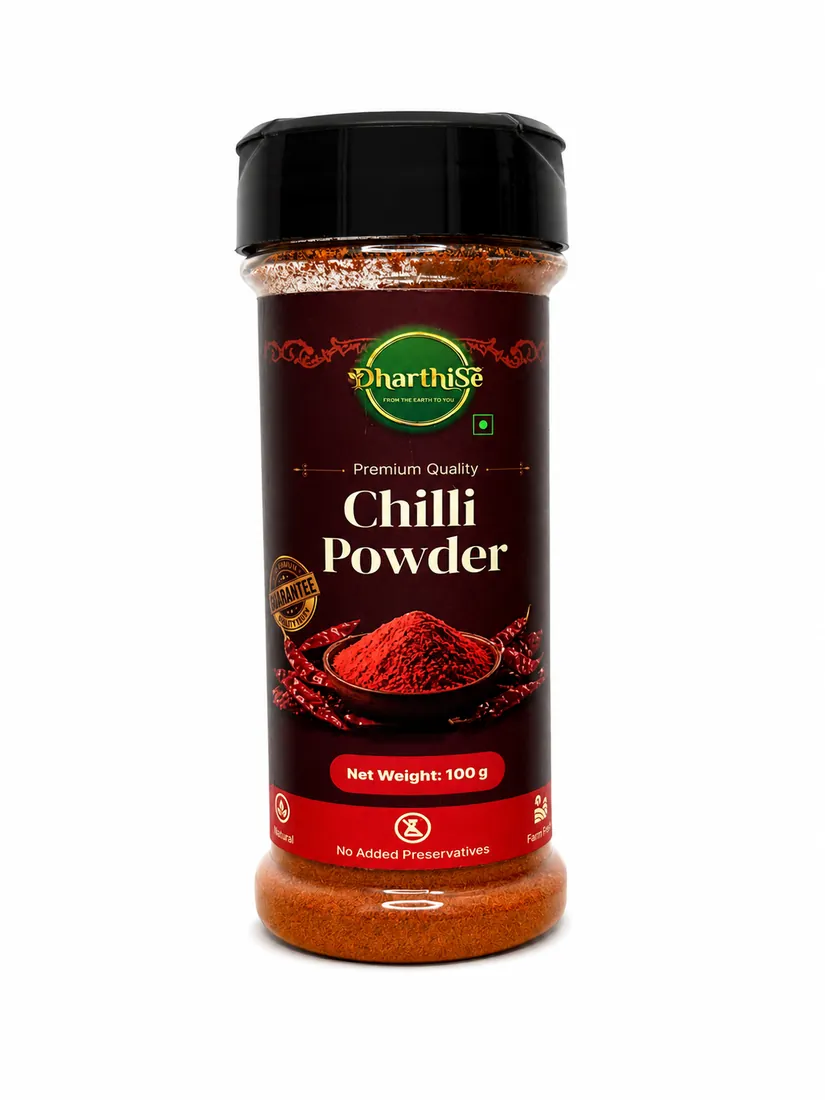
Red Chilli Powder
Red chilli milled to a vibrant powder — colour and controlled heat for blends, sauces and marinades.

Available grades & pack sizes
Every batch ships with a Certificate of Analysis. Bulk grades available on request.
Applications
What red chilli powder is, and why variety decides everything
Red chilli powder is dried red chilli, milled. What is not obvious from the shelf is that "red chilli powder" describes a category rather than a product — the variety in the bag determines whether you get heat, colour, or both, and buying the wrong one is the most common mistake in this aisle.
Broadly, the Indian varieties split by what they are grown for. Guntur chilli is the heat workhorse: fiery, with a strong red colour, and the basis of most everyday Indian cooking. Byadgi is prized for deep colour with comparatively mild heat, which is why it dominates in dishes and products that need to look rich without burning. Kashmiri chilli sits further along the same axis — bright red, notably mild, and used almost entirely for colour.
Our red chilli powder is made from premium Guntur chillies, chosen for a fiery taste and a strong red colour.
Cooking with it
- Curries, dals and sabzis
- Marinades, tandoori pastes and dry rubs
- Snack seasonings, sauces and chutneys
- Spice blends where both heat and colour are wanted
Chilli powder blooms in hot fat, and blooming is also where it burns. Added to oil that is too hot it turns bitter and dark within seconds, and there is no recovering the dish. Lower the heat before it goes in, or add it with a splash of liquid.
Dose by variety, not by habit. A spoon of Kashmiri and a spoon of Guntur are not remotely the same instruction.
Where it goes in manufacturing
We supply red chilli powder into spice blends, snack seasoning, meat marinades, and soups and sauces. For manufacturers the two specifications that usually matter are heat level and colour value, and both are batch-level facts that belong on a Certificate of Analysis. Every DharthiSe batch ships with one.
Colour is also where adulteration concentrates in this category, which makes documented testing more important for chilli than for almost any other ground spice.
A note on adulteration
Because buyers judge chilli by redness, colour is what gets faked. Sudan dyes — industrial colourants with no place in food — have caused international recalls of chilli products, and the EU tests chilli consignments for them specifically. Brick powder and starch have also been used as cheap bulking agents.
None of this is visible to the eye. Provenance and lab results are the only real protection, and any chilli you intend to export deserves testing against the destination market's limits before it ships rather than after it lands.
Judging quality before you buy
Good chilli powder is a rich, natural red, not a fluorescent one. An unnaturally uniform, bright colour is a warning rather than a selling point. It should smell of chilli — fruity and pungent — rather than dusty. Rub a little between your fingers: it should feel like ground chilli, not gritty or oddly slippery.
Storage
Airtight, cool and dark. Light degrades chilli's colour quickly, which is the whole reason many buyers bought it, so a clear jar in sunlight is the worst possible storage.
Buying: retail packs and bulk supply
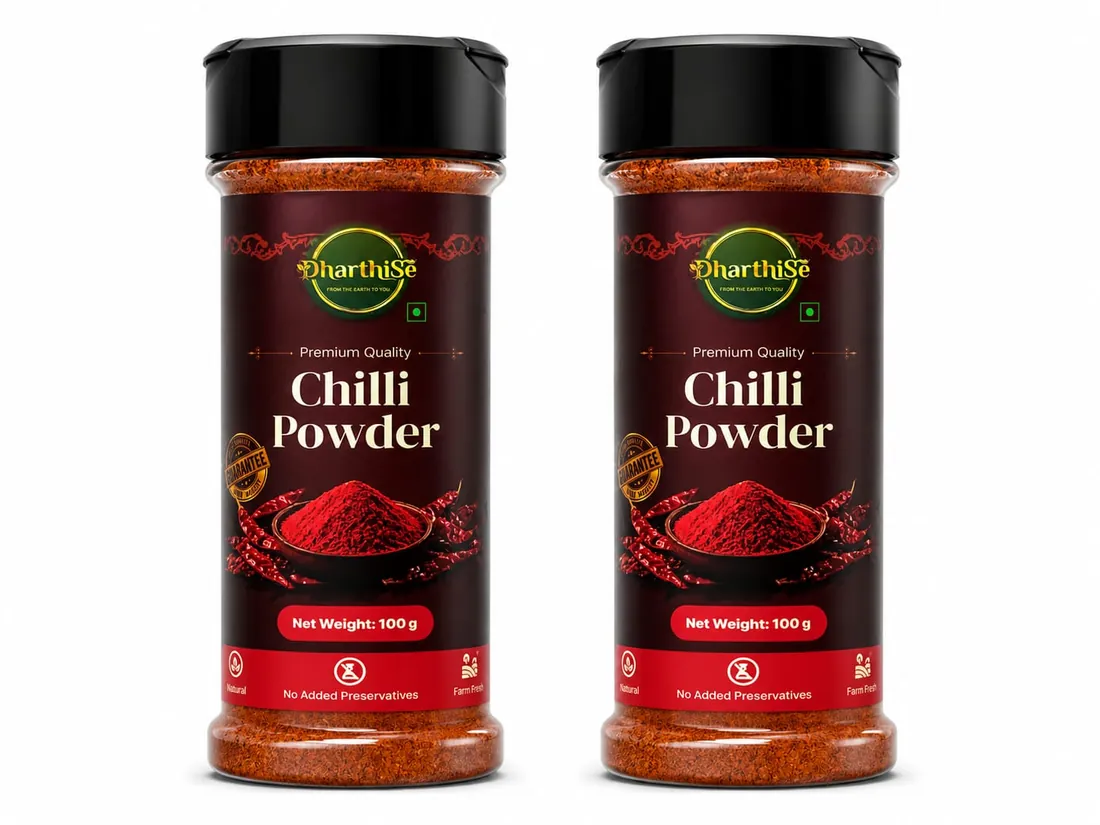
For home kitchens we pack red chilli powder in 100g jars and two-jar packs. For manufacturers, exporters and private-label brands we supply in bulk with a COA on every batch and export documentation prepared for the destination market, including the testing that European and Gulf buyers expect.
Frequently asked
- What is the difference between Guntur, Byadgi and Kashmiri chilli powder?
- They are grown for different things. Guntur is the heat workhorse — fiery with a strong red colour, and the basis of most everyday Indian cooking. Byadgi delivers deep colour with comparatively mild heat, so it suits dishes that need to look rich without burning. Kashmiri is bright red and notably mild, used almost entirely for colour. Substituting one for another at the same dose will change a dish substantially.
- Which chilli does DharthiSe use?
- Our red chilli powder is made from premium Guntur chillies, selected for a fiery taste and a strong red colour. For bulk and export supply we can discuss other varieties where your application needs colour rather than heat.
- Why does my chilli powder taste bitter?
- Almost always because it was added to oil that was too hot. Chilli powder blooms in hot fat, and that is also where it burns — it turns dark and bitter within seconds, and the dish cannot be recovered. Lower the heat before the chilli goes in, or add it together with a splash of liquid.
- How is red chilli powder adulterated?
- Because buyers judge chilli by redness, colour is what gets faked. Sudan dyes — industrial colourants with no place in food — have caused international recalls, and the EU specifically tests chilli consignments for them. Brick powder and starch have also been used as bulking agents. None of it is visible to the eye, so provenance and per-batch lab testing are the only real protection.
- How should chilli powder be stored?
- Airtight, cool and out of the light. Light degrades chilli's colour quickly, which is usually the property the buyer paid for, so a clear jar on a sunny shelf is the worst option. A sealed container in a dark cupboard preserves both colour and aroma considerably longer.
- Do you supply red chilli powder for export?
- Yes. We supply red chilli powder in bulk to food manufacturers, exporters and private-label brands, with a Certificate of Analysis on every batch and export documentation prepared for the destination market. Given the testing European and Gulf buyers expect on chilli, we recommend confirming against your destination's limits before shipment rather than after landing.
Source Red Chilli Powder with confidence
Tell us your spec, grade and volume — we'll respond within 48 hours.