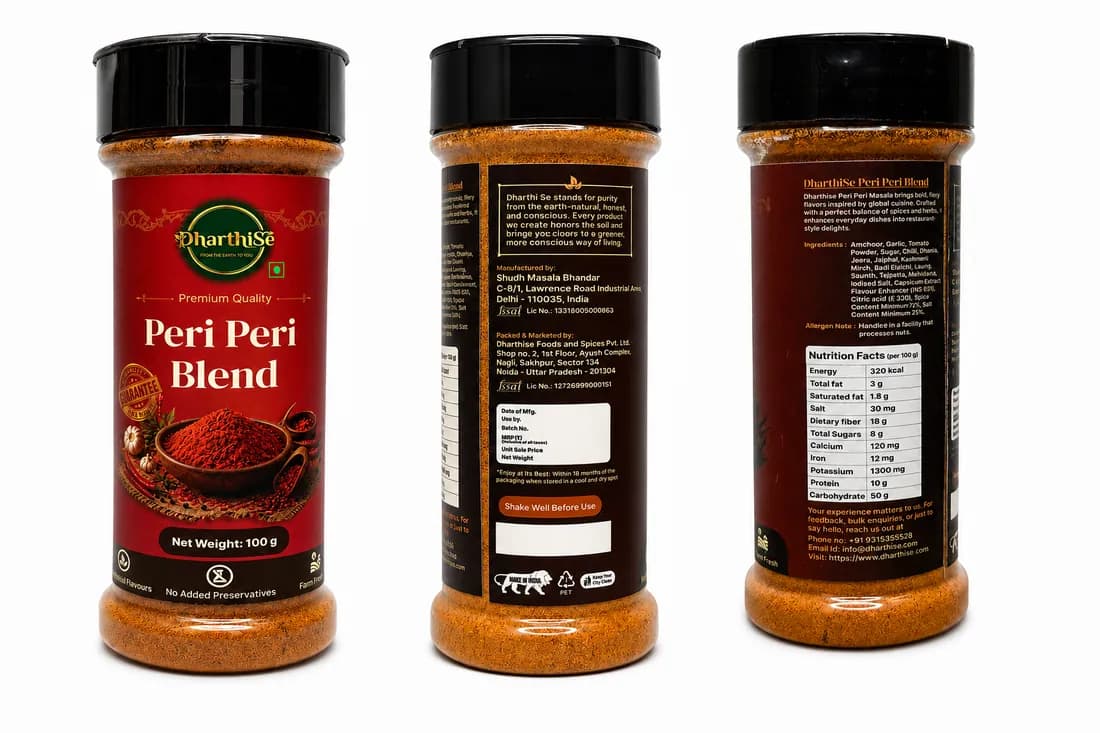
Peri Peri Seasoning
A bright, tangy peri peri seasoning blend for snacks, fries, grills and coatings.

Available grades & pack sizes
Every batch ships with a Certificate of Analysis. Bulk grades available on request.
Applications
What peri peri seasoning is
Peri peri seasoning is a blend rather than a single spice. The name comes from the African bird's eye chilli — piri-piri in Swahili — and the seasoning built around it travelled through Portuguese trade routes into a style now familiar worldwide, largely through grilled chicken and, more recently, through fries.
Because it is a blend, there is no single authoritative recipe. What a peri peri seasoning should reliably deliver is a particular balance: chilli heat, a distinct tang, garlic and herbal notes behind it, and enough salt to make the whole thing land on a hot snack. Ours is built to be bright and tangy rather than purely hot, which is what makes it work as a sprinkle rather than only as a marinade.
Using it
Peri peri is a finishing seasoning as much as a cooking one, and that is unusual among the spices in this catalogue. Most of our powders want heat and fat early; this one is at its best tossed over something hot the moment it comes out of the oil or the oven.
- Fries, wedges and potato chips — toss immediately while still glistening
- Roasted makhana, popcorn, nuts and corn
- Grilled and roasted chicken, paneer and vegetables
- Mixed into mayonnaise or dahi for a fast dip
- Rubbed on before grilling, as a conventional marinade base
The reason to season straight out of the fryer is mechanical rather than culinary: the seasoning needs a little surface oil to cling to. Sprinkled on food that has already cooled and dried, most of it ends up in the bottom of the bowl.
Where it goes in manufacturing
Peri peri has become one of the highest-volume snack seasonings in the Indian market, and we supply it into snack seasoning, meat marinade and spice blend applications. For a snack producer the questions are usually cling, dose consistency and whether the profile holds up through the coating process — a blend that tastes right in a bowl can read flat once it is applied at production rates.
We also develop custom seasoning blends. If you need a peri peri tuned to a specific heat level, salt content or tang, that is a formulation conversation rather than a catalogue order, and it starts with a sample.
What to look for in a peri peri blend
Balance is the whole game. A blend that leads with salt is cheap seasoning wearing a peri peri label. One that is only hot has lost the tang that makes the style recognisable. You should be able to taste chilli, acidity and garlic distinctly rather than a single flat heat.
For any commercial quantity, the Certificate of Analysis matters as it does across the range — moisture, microbiological safety and purity against the agreed specification, per batch.
Storage
Airtight, cool and dark, and sealed tightly between uses. Blends containing salt and acidulants draw moisture readily and will cake, and a caked seasoning will not distribute evenly over a snack, which defeats the point.
Buying: retail packs and bulk supply
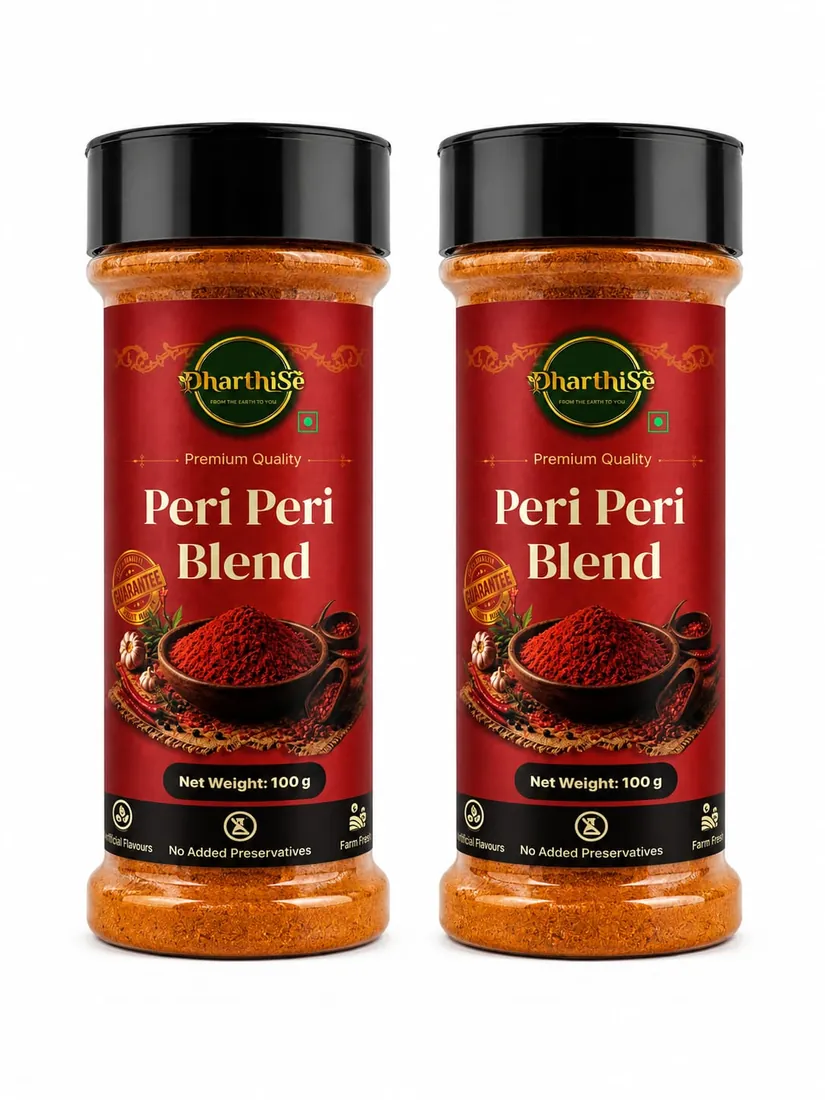
For home kitchens we pack peri peri seasoning in 100g jars and two-jar packs. For snack manufacturers, exporters and private-label brands we supply in bulk, including custom blends developed to your specification, with a COA on every batch and export documentation prepared for the destination market.
Frequently asked
- What is peri peri seasoning made of?
- Peri peri is a blend rather than a single spice, built around the African bird's eye chilli that gives it its name. There is no single authoritative recipe, but a good one delivers a specific balance: chilli heat, a distinct tang, garlic and herbal notes behind it, and enough salt to land on a hot snack. Ours is built to be bright and tangy rather than purely hot.
- How spicy is peri peri seasoning?
- Ours is balanced for tang as much as heat, which makes it usable as a sprinkle rather than only as a marinade. Peri peri blends vary widely between producers, so heat is not comparable across brands — if you need a specific heat level for a product line, that is best handled as a custom blend developed against your specification.
- When should I add peri peri seasoning?
- Toss it over food the moment it comes out of the oil or oven, while the surface is still hot and glistening. The seasoning needs a little surface oil to cling to — sprinkled onto food that has already cooled and dried, most of it ends up in the bottom of the bowl. It also works as a conventional rub before grilling.
- What can I use peri peri seasoning on?
- Fries, wedges and chips, roasted makhana, popcorn, nuts and corn, grilled or roasted chicken, paneer and vegetables, and mixed into mayonnaise or dahi as a fast dip base. It works both as a finishing sprinkle and as a marinade rub.
- Why has my peri peri seasoning gone hard?
- Blends containing salt and acidulants draw moisture from the air more readily than plain ground spices, so they cake if the container is not properly sealed or is stored near steam. It is a performance problem as much as a quality one — caked seasoning will not distribute evenly over a snack, which defeats the purpose.
- Can you develop a custom peri peri blend for our brand?
- Yes. We develop custom seasoning blends tuned to a specific heat level, salt content or tang, and supply them in bulk for snack manufacturing and private label, with a Certificate of Analysis on every batch and export documentation for the destination market. It starts with a sample against your brief rather than a catalogue order.
Source Peri Peri Seasoning with confidence
Tell us your spec, grade and volume — we'll respond within 48 hours.