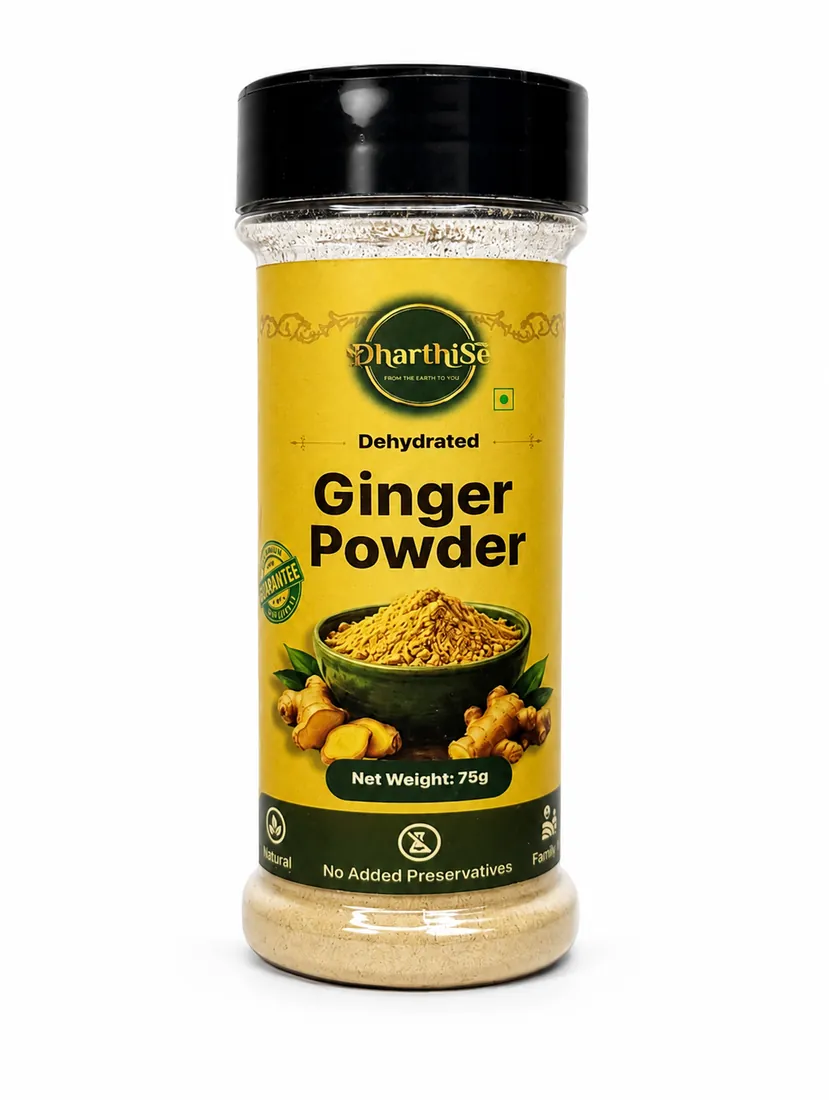
Dehydrated Ginger Powder
Dried ginger ground to a warm, aromatic powder for beverages, bakery, blends and savoury applications.

Available grades & pack sizes
Every batch ships with a Certificate of Analysis. Bulk grades available on request.
Applications
What ginger powder (saunth) is
Ginger powder, or saunth, is mature ginger rhizome that has been dried and ground. Drying does something more interesting to ginger than it does to most spices: it changes the flavour rather than just concentrating it. Fresh ginger is sharp, bright and slightly citrus. Dried ginger is warmer, rounder and more pungent in a lingering way.
This is why recipes are not always interchangeable. Substituting saunth into a dish built around fresh ginger gives you a different result — often a good one, but not the same one. Chai is the clearest example: fresh ginger gives a bright hit, saunth gives a deeper warmth that carries through the whole cup.
Cooking with it
- Masala chai, where saunth is traditional and fresh ginger is the substitute rather than the other way round
- Golden haldi doodh and other warm milk drinks
- Bakery — gingerbread, biscuits, cakes and spiced batters, where fresh ginger's water would matter
- Dry spice blends, garam masala and chai masala
- Marinades and dry rubs, and the base of many kadha and herbal preparations
Ginger powder is potent and a little goes a long way. Because it is dry, it also blooms well: give it a moment in hot fat or hot liquid before the rest of the ingredients arrive and the flavour opens up considerably.
Where it goes in manufacturing
We supply saunth into beverages, bakery, spice blends and nutraceutical applications. For beverage and supplement work, dried ginger has practical advantages over fresh that have nothing to do with taste — consistent dosing, no cold chain, no water, and a far simpler microbiological picture.
Judging quality before you buy
Colour should be a pale buff or light tan. Grey suggests age or poor drying. A strongly yellow powder is worth a question, because turmeric is a cheap and common adulterant in ginger powder and it stains obviously.
Smell is the better test. Good saunth is sharply aromatic straight from the jar. Ginger's volatile oils fade over time, so a muted smell means an old grind regardless of the packing date printed on the front.
For anything beyond a domestic quantity, the Certificate of Analysis is the real check — moisture, microbiological safety and purity against the agreed specification, per batch. We ship one with every batch.
Storage
Airtight, cool, dark. Ginger powder loses aroma faster than it loses safety, so the practical failure mode is a jar that is technically fine and tastes of very little. Buy a size you will actually finish, keep it away from steam, and do not decant it into a jar that sits open beside the stove.
Buying: retail packs and bulk supply
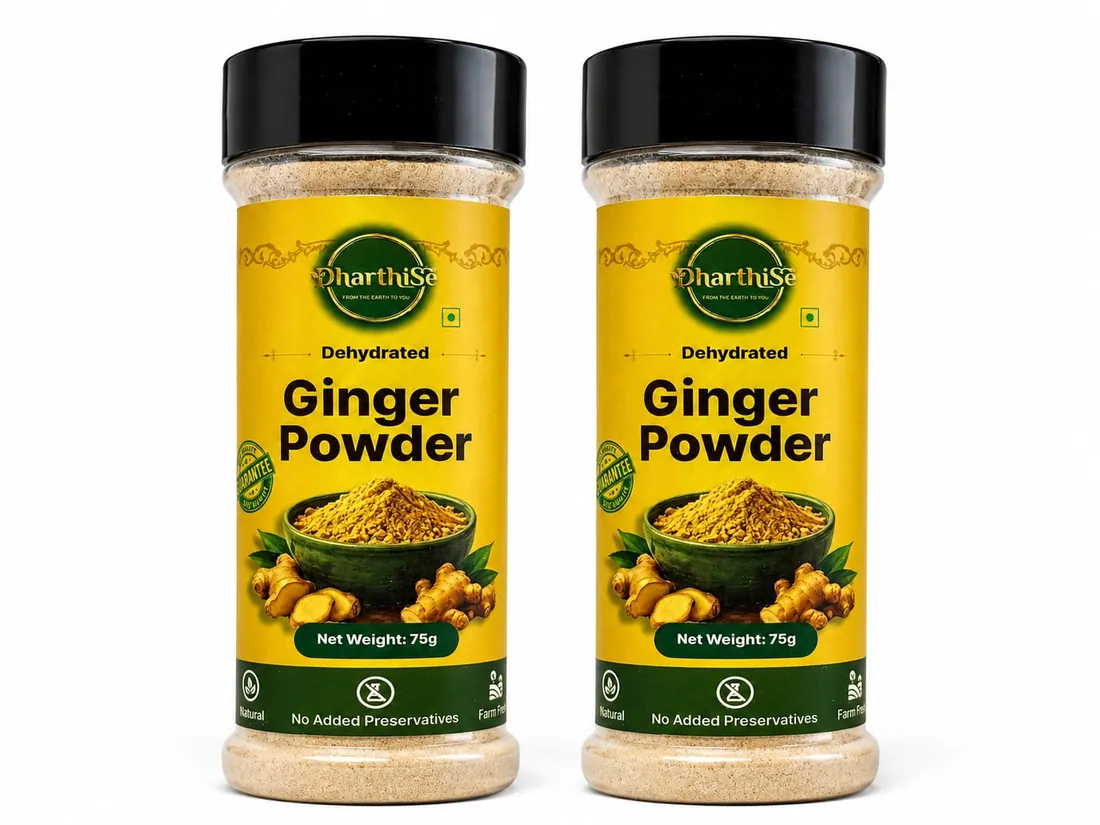
For home kitchens we pack ginger powder in 75g jars and two-jar packs. For manufacturers, exporters and private-label brands we supply in bulk with a COA on every batch and export documentation prepared for the destination market.
If you are formulating a beverage or supplement line, ask for a sample and test it against your own specification before committing — we send evaluation samples free with the matching COA.
Frequently asked
- What is saunth and how is it different from fresh ginger?
- Saunth is dried, ground mature ginger. Drying changes ginger's character rather than simply concentrating it: fresh ginger is sharp, bright and slightly citrus, while saunth is warmer, rounder and more lingeringly pungent. The two are not straight substitutes — swapping one for the other gives a different result, often good but never identical.
- How much ginger powder replaces fresh ginger?
- Roughly a quarter teaspoon of ginger powder for a teaspoon of grated fresh ginger, though you should adjust to taste because the flavour profile differs rather than just the strength. Ginger powder also benefits from blooming — give it a moment in hot fat or hot liquid before the other ingredients go in.
- Is ginger powder good for tea and chai?
- Yes, and in masala chai saunth is the traditional choice rather than the shortcut. Fresh ginger gives a bright, sharp hit at the front; dried ginger gives a deeper warmth that carries through the whole cup. It is also used in golden haldi doodh and a range of kadha preparations.
- How can I spot adulterated ginger powder?
- Look at the colour first. Good saunth is pale buff to light tan. A strongly yellow powder warrants a question, because turmeric is a cheap and common adulterant that stains obviously. Then smell it — genuine saunth is sharply aromatic straight from the jar, and a muted smell means an old grind whatever the pack date says. For any commercial quantity, ask for a per-batch Certificate of Analysis.
- Does ginger powder lose its strength over time?
- Yes. Ginger's volatile oils fade with exposure to air, heat and light, so the usual failure mode is a jar that is perfectly safe and tastes of very little. Store it airtight, cool and dark, keep it away from steam, and buy a pack size you will realistically finish.
- Do you supply ginger powder in bulk for beverages or supplements?
- Yes. We supply dehydrated ginger powder in bulk into beverage, bakery, spice-blend and nutraceutical applications, with a Certificate of Analysis on every batch and export documentation prepared for the destination market. Free evaluation samples with the matching COA are available so you can test against your own specification first.
Source Dehydrated Ginger Powder with confidence
Tell us your spec, grade and volume — we'll respond within 48 hours.