Guide
Your Masala Isn't Weak. It's Old.
6 min read
Why ground spices lose flavour, how to tell an old spice from a poor one, and the buying and storage habits that keep haldi, mirch and dhaniya at full strength.
A common kitchen complaint goes like this. "My mother's dal tasted of dhaniya. I use the same recipe and twice the powder, and mine tastes of nothing." The usual conclusion is that spices are not what they used to be, or that the brand has started cutting corners, and the usual response is to switch brands or add another spoon.
Sometimes the brand really is the problem. Much more often the spice in the jar was fine on the day it was ground and has simply been dead for months.
What flavour in a spice actually is
The smell and taste of a spice come mostly from volatile oils held inside the seed, root or pod. "Volatile" is the important word. These oils evaporate, and they react with oxygen, light and heat.
A whole coriander seed is a sealed container. Its oils are locked inside and it keeps its character for a long time. Grinding breaks the container. It multiplies the surface area exposed to air many times over, which is why freshly ground dhaniya fills a room, and also why that aroma starts leaving the powder from the moment it is made.
Nothing harmful happens. An old ground spice is still safe to eat within its best-before date. It just has less to give. Colour usually outlasts aroma, which is the trap: a year-old chilli powder can look perfectly red and contribute very little heat or fragrance.
The habits that kill a spice
By the time a spoon of powder reaches your dal it has had two lives. The first ran from grinding to the day you bought it, and the second from that day to now. Most of the damage in the second life comes from four ordinary habits:
- The big pack. A kilo bag looks like good value. If your household uses 100 grams of coriander a month, the last third of that bag is eight to ten months old when you reach it.
- The shelf above the stove. It is the most convenient place in the kitchen and the worst one for spices: warm, steamy and often bright.
- The clear jar on the counter. Light fades colour and aroma. A glass jar on an open shelf is on display to exactly the thing that damages it.
- The wet spoon and the open lid. Steam from the pot goes into the jar every time you shake it over a boiling kadhai. Moisture clumps the powder and speeds everything else up.
Stop judging by brand. Start judging by age.
When food tastes flat, people ask whether the spice is good quality. A better first question is how old it is. Quality sets the ceiling: a high-curcumin turmeric or a properly hot Guntur chilli starts with more to lose. Age decides how much of that is left on the day you cook.
This changes what you look for when you buy. The brand name and the price per gram matter less than the manufacturing date, the pack size and how fast you will finish it. A modest spice used within a few months of grinding will often beat a premium one that has spent a year open on a shelf.
You can test a jar in ten seconds. Rub a pinch between your fingers and smell it. A live spice announces itself immediately. If you have to bring it to your nose and think about it, the spice is past its best, and no extra spoonful will fix the dish. More old powder adds bulk and a dusty bitterness, and no aroma.
How to keep spices at full strength
- Buy the size you will finish in two to three months. For most homes that is a 75 to 120 g jar, bought more often.
- Read the manufacturing date in the shop or on the listing. Choose the most recent one, the way you would with bread.
- Store jars closed, in a cupboard, away from the stove and the window.
- Spoon the spice out into your hand or a small bowl away from the pot, so steam never reaches the jar.
- Bloom ground spices briefly in hot oil or ghee at the tadka stage. Most of their flavour compounds dissolve in fat, so you get more out of the same quantity.
- Keep whole spices for the ones you use rarely, and grind small amounts as needed.
What we do about it
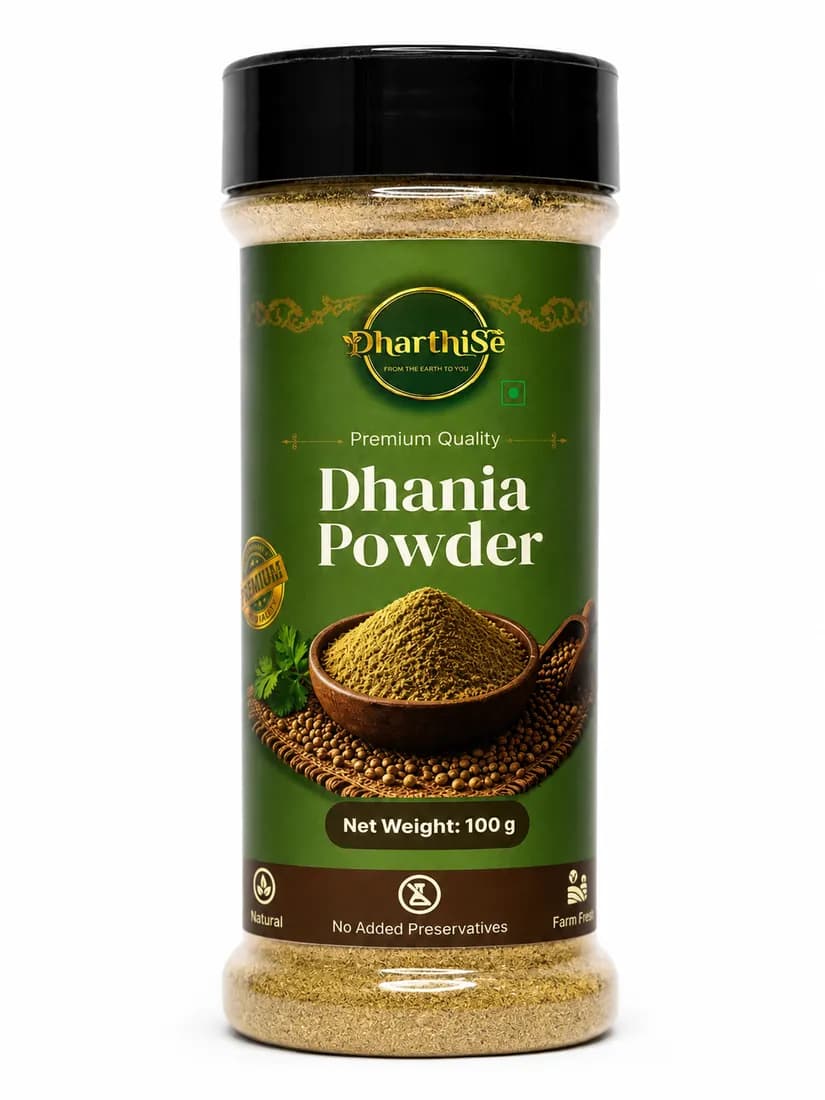
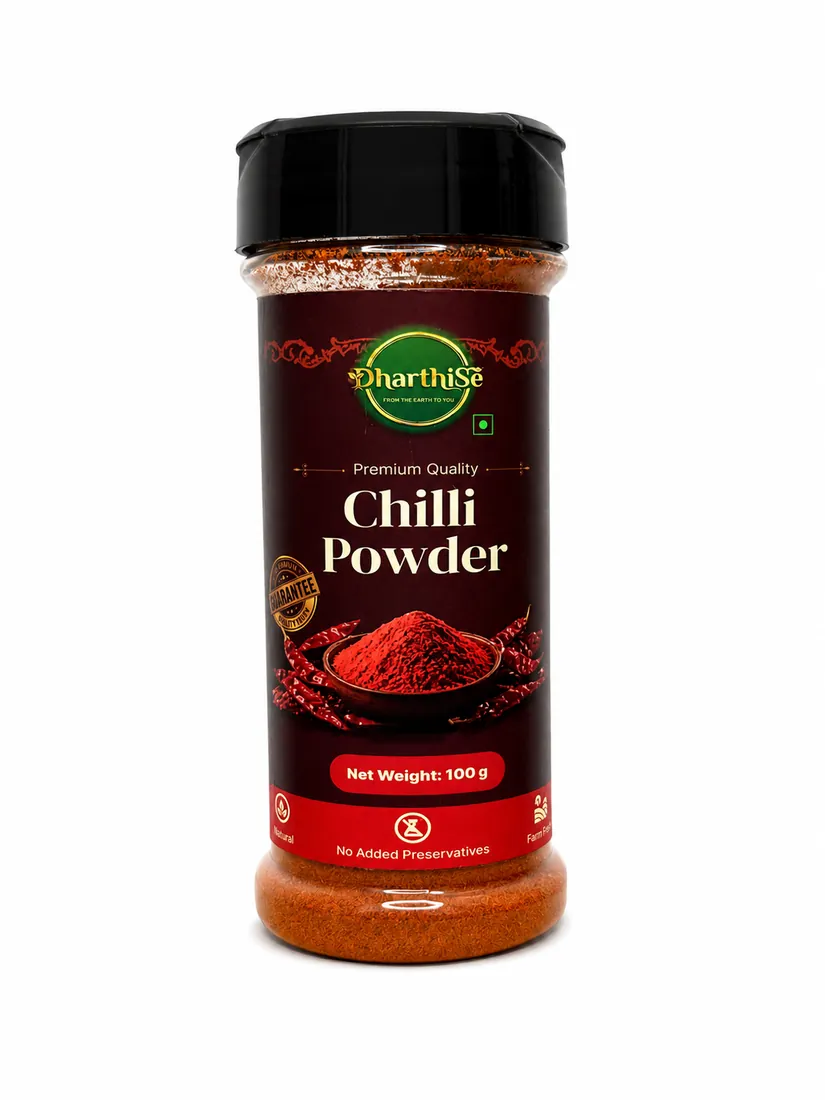
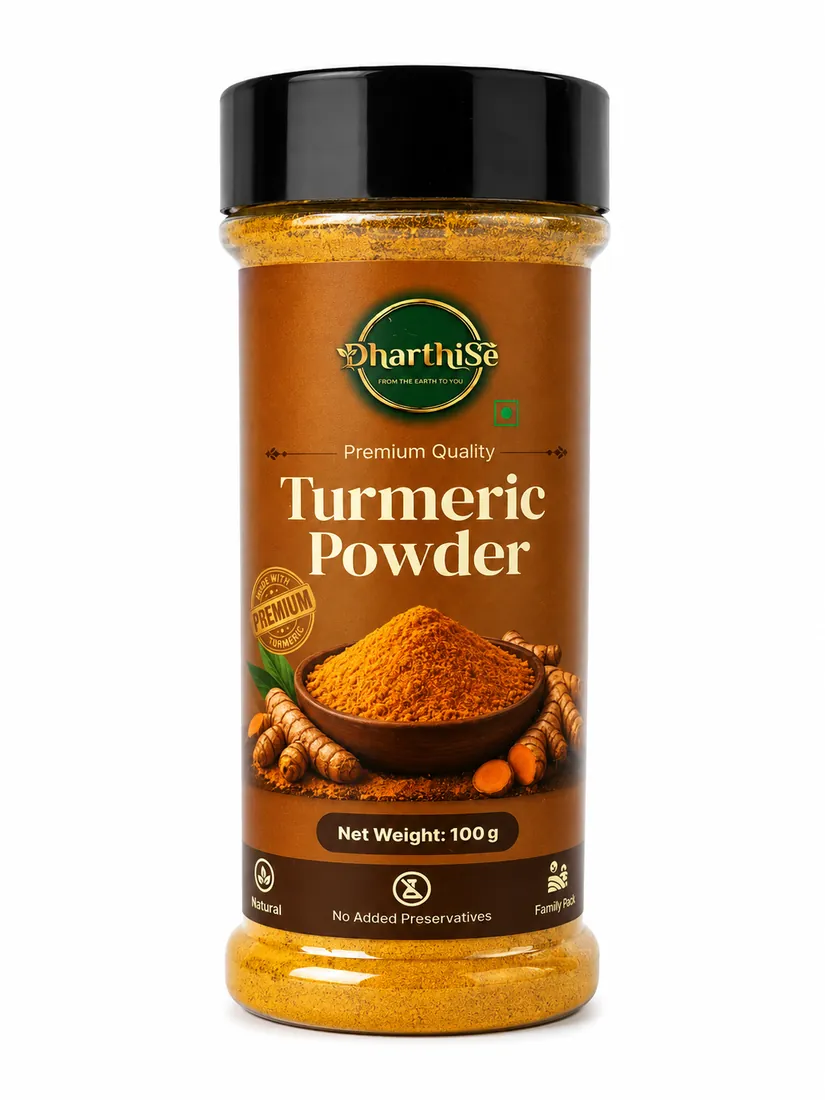
We made three decisions at DharthiSe with freshness in mind. We pack our everyday spices and powders in small jars, mostly 75 to 120 g, so a household finishes one while it is still lively. We dry at controlled low temperatures, because spices and vegetables dried hot and fast have lost a good part of their aroma before they are ever packed. And every pack carries a batch number you can look up at /verify, which shows the manufacturing date, the packing date and the best-before date for that batch, so you never have to guess how old your jar is.
If your masala has been letting you down, do the finger test on what is in your cupboard tonight. Replace only the jars that fail it, buy smaller, and move them off the shelf above the stove. You will use less spice and taste more of it. DharthiSe is available on this site and on Amazon and Flipkart. From the earth to you.