Guide
The Most Expensive Vegetable in Your Kitchen Is the One You Throw Away
6 min read
Fresh tomatoes and onions are about 90% water, and a good share of them spoil before you cook them. A practical way to cut kitchen waste with a dehydrated pantry.
Every household has the same drawer. At the bottom of the fridge there is a tomato that has gone soft, half an onion wrapped in something, a knob of ginger that has dried into a fossil, and a head of garlic that has started to sprout. Nobody planned to waste them. They were bought with good intentions on Sunday and lost to a busy Wednesday.
When people complain about vegetables, they complain about price. Tomatoes are ₹30 one month and ₹100 the next, and that feels like the problem. We think the price on the board is the smaller half of it.
What you are actually paying for
A fresh tomato is roughly 94 to 95 percent water. An onion is close to 89 percent. Ginger is around 80 percent. When you carry a kilo of tomatoes home, about 950 grams of what is in the bag is water, and the flavour, colour and acidity you wanted for your gravy live in the remaining 50 grams or so.
That is not a criticism of fresh vegetables. Water is what makes a tomato a tomato in a salad or a sandwich. It does mean that for cooked food, where the water is going to be boiled off in the kadhai anyway, you are paying to buy water, carry it, refrigerate it and then evaporate it.
Now add the drawer. Say you buy a kilo of tomatoes at ₹40 and a quarter of it goes soft before you use it. You did not pay ₹40 a kilo. You paid ₹40 for 750 grams, which is about ₹53 a kilo for the tomatoes you actually cooked. The spoiled quarter never shows up on a bill, so it never feels like a cost, but it is the most expensive part of the purchase because you got nothing for it.
A different question to ask
The usual question is "how do I get vegetables cheaper?" It leads to buying more when prices dip, which leads straight back to the drawer.
The more useful question is "which of these vegetables do I need fresh, and which do I only need for their flavour?" Once you split your cooking that way, most kitchens find the same thing. The tomato in the kachumber has to be fresh. The tomato in the dal, the gravy, the rasam and the pasta sauce does not. It only has to taste like tomato and give the dish its colour and tang.
The same split works for onion and garlic. A tadka of sliced onions needs fresh onions. The onion that disappears into a gravy base, a marinade or a soup is there for flavour and body, and that job can be done by a spoon from a jar.
What dehydration does, and what it does not
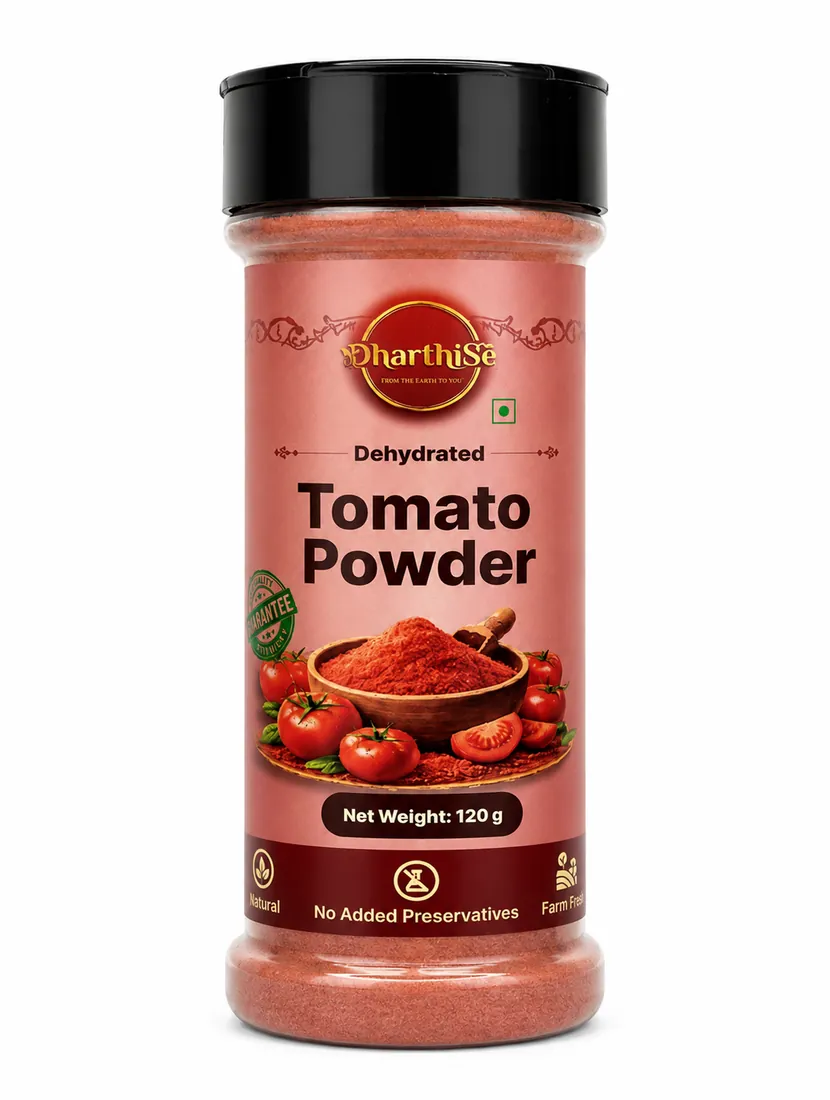
Dehydrating a vegetable removes the water and leaves the solids, which is where the flavour sits. It takes somewhere around 16 to 20 kilos of fresh tomato to make one kilo of tomato powder, and roughly eight to ten kilos of onion to make a kilo of onion powder. That is why a 120 g jar goes much further than it looks.
A dry powder also stops behaving like a vegetable in the ways that cause waste. It does not bruise, sprout or go soft, it does not need the fridge, and you take out exactly one spoon at a time. The price you paid for the jar is the price of what you use, because all of it gets used.
It is worth being straight about the limits. Powder will not give you the bite of a fresh onion or the juice of a raw tomato, and how it was dried matters. Vegetables dried hot and fast lose colour and aroma. We dry ours at controlled low temperatures for that reason, and the difference shows in the colour of the gravy.
How to set up a two-track kitchen
- Buy fresh in small amounts, only for dishes where the vegetable is eaten raw or is the main texture: salads, raita, sliced-onion tadka, sandwiches.
- Keep tomato powder for the cooked base. About one tablespoon whisked into a quarter cup of warm water stands in for a medium tomato in gravies, dals and sauces.
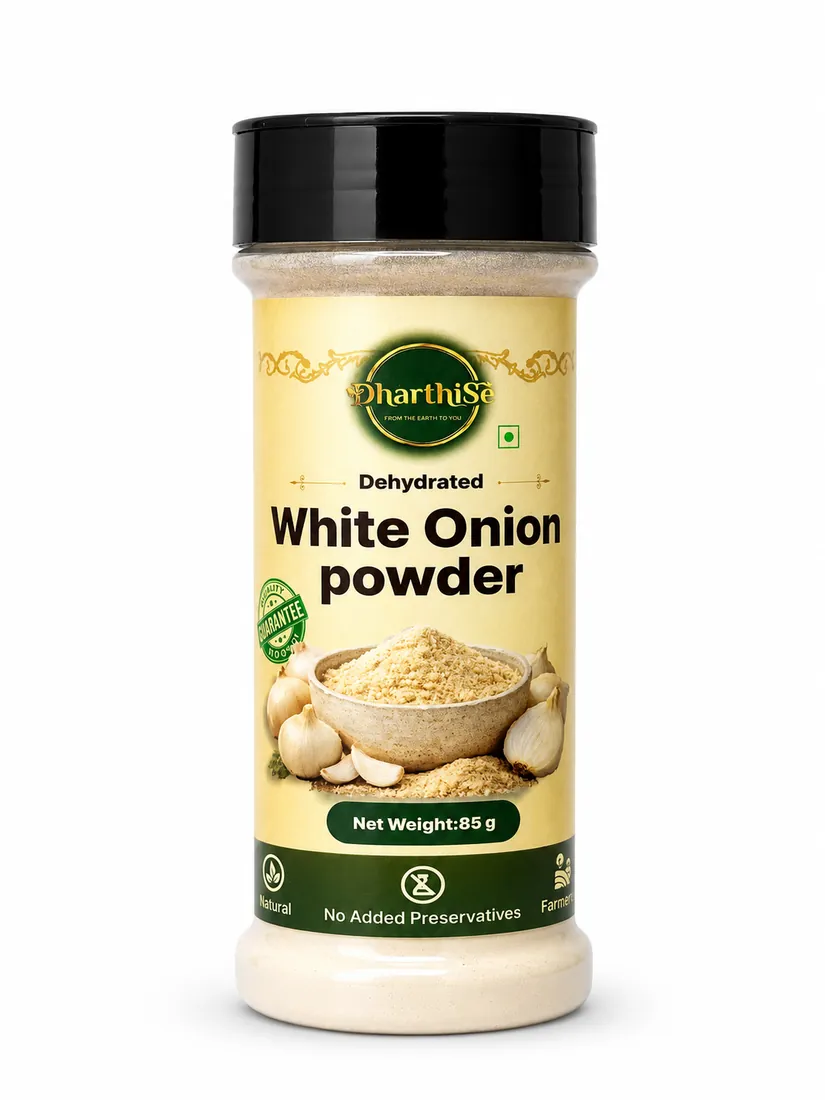
- Keep white onion powder for gravy bases, marinades, soups and dry rubs, where the onion would have been cooked down to nothing anyway.
- Keep garlic and ginger powder for the days you have no time to peel and grate, and for dry uses such as rubs and seasoning, where fresh paste would make things wet.
- Store the jars closed, dry and away from the stove. Use a dry spoon. Moisture is the only thing that shortens the life of a dry powder.
Where we come in
DharthiSe makes dehydrated tomato, white onion, garlic and ginger powders for exactly this job. The ingredient line on each jar tells you what is in it: the dehydrated vegetable, plus a small amount of a permitted anti-caking agent (INS 551) that keeps a fine, moisture-hungry powder from setting into a brick. There is no added colour. Every batch carries a batch number you can look up on our verify page to see where it was grown and when it was packed.
Start with one jar of tomato powder and make a single gravy with it. Our two-minute instant tomato gravy recipe is the quickest test. If the drawer at the bottom of your fridge is emptier a month later, you will have your answer. You can order from this site, and DharthiSe is also available on Amazon and Flipkart. From the earth to you.