Guide
Tomato at ₹20 or ₹200: Restaurant Food Cost Is a Variance Problem
7 min read
Why restaurants and cloud kitchens lose margin to swings in tomato and onion prices, prep yield and cooks, and how a dehydrated gravy base fixes cost per portion.
In July 2023 retail tomato crossed ₹200 a kilo in several Indian cities. A couple of months later farmers in some markets were dumping the crop because it would not fetch the cost of transport. Onion does the same thing most years, on a slightly slower clock.
If you run a restaurant, a cloud kitchen or a catering unit, you felt both halves of that. Your menu price did not move. Your makhani base, your pav bhaji and your curries all ran on the same two ingredients, and for a few weeks the gravy cost more than the protein in it.
The problem most kitchens think they have
Ask an owner what went wrong in those weeks and the answer is "tomato got expensive." The response follows from the diagnosis: negotiate harder with the vendor, buy from the mandi at 5 a.m., switch to a cheaper grade, quietly thin the gravy.
All of these treat price as the enemy. Price is only one of three things moving under you, and probably not the one costing you the most over a year.
The problem they actually have
A kitchen that knows its tomato will cost ₹60 a kilo all year can build a menu around ₹60. It prices the dish, sets the portion and makes its margin. A kitchen whose tomato averages ₹40 but swings between ₹15 and ₹200 cannot plan anything, even though its average is lower. The damage comes from the variance.
There are three sources of it, and fresh produce carries all of them:
- Price variance. The mandi rate changes week to week and you learn about it on the invoice.
- Yield variance. A crate of tomatoes in peak season is firm and red. A crate in the monsoon is watery, and part of it goes in the bin on arrival. The cost per usable kilo is never the cost per kilo you paid. Onions lose skin, tops and anything that has gone soft in the sack.
- People variance. Two cooks reduce the same base to two different thicknesses. One uses eight tomatoes for a batch and the other uses eleven. The dish tastes different on Tuesday, and your regulars notice before you do.
Then there is the cost that never appears under "vegetables": the hours of washing, blanching, chopping and reducing, the gas to boil off water you paid for, and the cold storage that holds it all.
Fix the base, keep the garnish
The practical answer is to separate the part of the dish the guest sees from the part the guest only tastes. Sliced onion on a kebab plate, tomato in a salad, a fresh garnish: these stay fresh, and they are a small share of your volume.
The gravy base is different. It is cooked down until no individual tomato or onion can be identified. Its job is colour, body, acidity and sweetness, and all four come from the solids in the vegetable. A tomato is about 95 percent water and an onion about 89 percent. A dehydrated powder is those solids with the water already taken out.
When the base is built from powder, the three variances shrink together. The price is agreed for the order instead of discovered each week. The yield is close to total, because there is no peel, no trim and no spoilage. The recipe becomes grams of powder and millilitres of water on a card, so the Tuesday cook and the Saturday cook produce the same gravy.
How to test it in your own kitchen
Do not take a supplier's word for this, including ours. Run the numbers on one dish.
- Pick your highest-volume gravy. Record what goes into one batch today: kilos of tomato and onion bought, kilos left after trimming, prep time, cooking time to reduce.
- Work out the real cost per portion from usable weight and labour, using this month's price and the worst price you paid last year.
- Make the same batch with a powder base. As a starting ratio, about one tablespoon of tomato powder in a quarter cup of warm water replaces one medium tomato. Adjust to your recipe and write the final gram weights down.
- Put the two gravies in front of your head chef without saying which is which. Judge colour, body and taste after the full dish is finished, with cream, butter and spices in.
- Compare cost per portion at both tomato prices. The number that matters is how far apart the two fresh figures are, and that the powder figure is the same in both columns.
You do not have to switch completely. Keeping some fresh tomato for brightness and building the bulk of the base from powder is a sensible place to land. The goal is a cost per portion you can predict.
What we supply, and on what terms
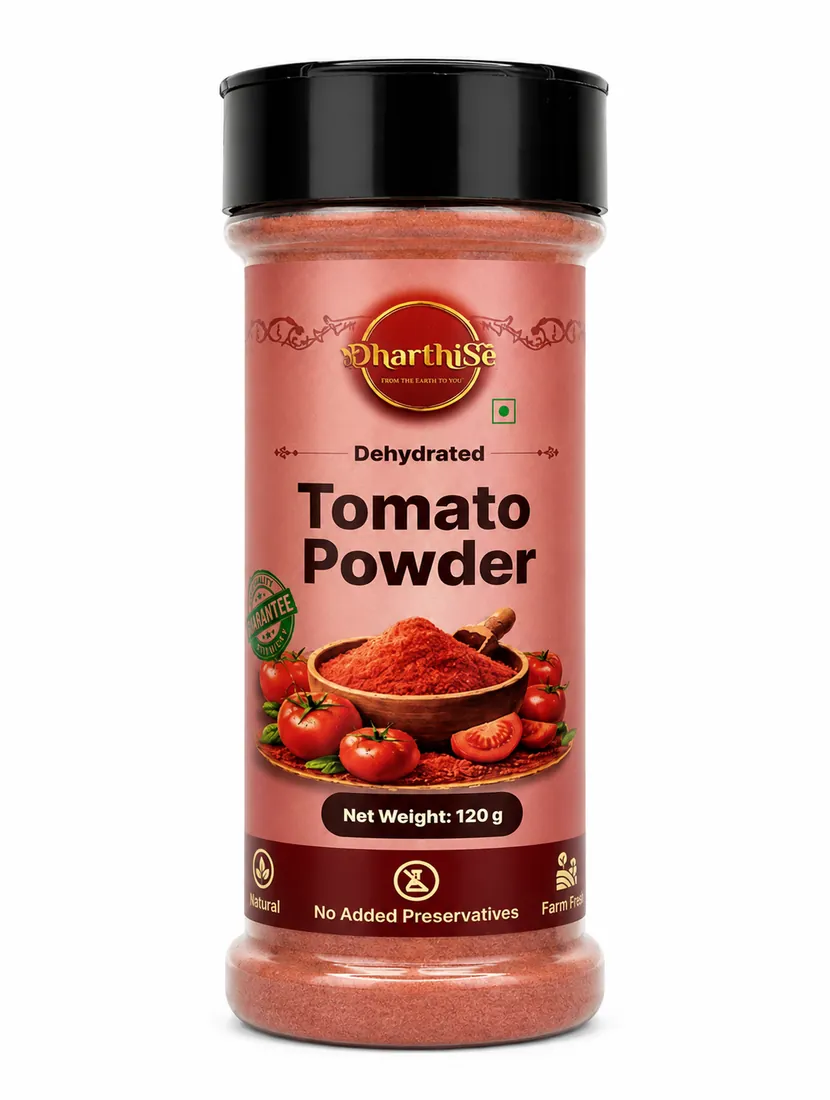
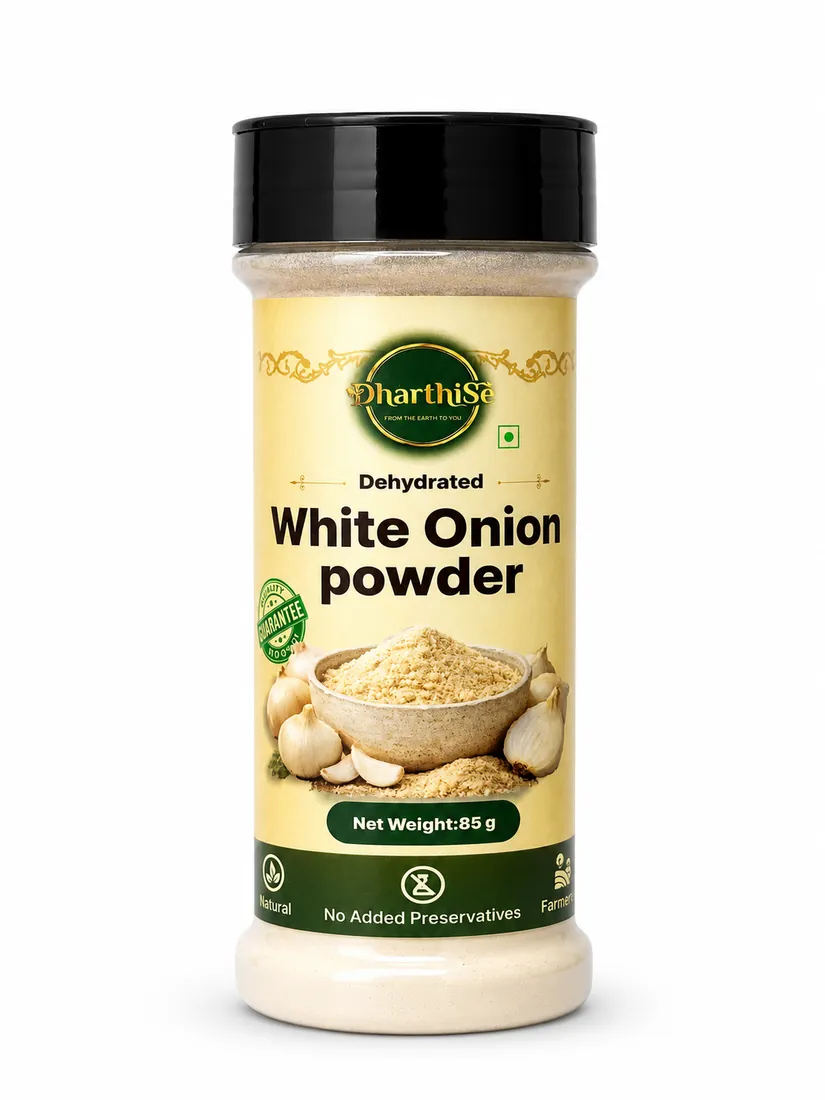
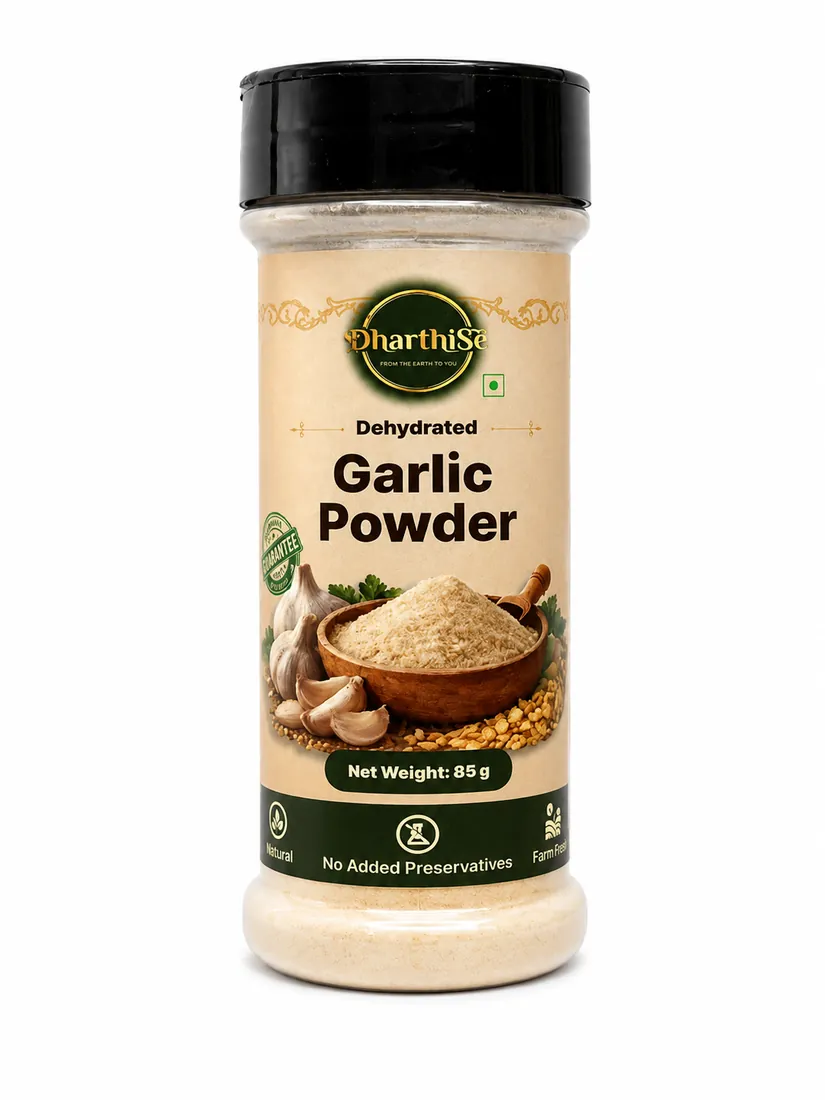
DharthiSe supplies dehydrated tomato, white onion, garlic and ginger powders to kitchens and food businesses, dried at controlled low temperatures so the colour survives. Smaller kitchens can start with our 400 g and 600 g kitchen packs from the site. For bulk supply our typical minimum is around 110 kg per product, you can mix products in one shipment, and typical lead time is five to seven days from a confirmed order.
Every batch ships with a Certificate of Analysis covering moisture, microbial load and purity, and reorders are made to the specification you approved. We send free samples first, so the blind test above costs you nothing but an afternoon. Request samples at /samples or send your quantities through /quote, and we will come back with a price that holds for the order. From the earth to you.