Guide
Ginger Powder (Saunth): Benefits and Ways to Use It
6 min read
What ginger powder (saunth) is, how it differs from fresh adrak, its warm flavour, a fresh-to-dry conversion, and 7 practical everyday ways to use it.
Saunth — dried ginger powder — is one of the most underused jars in the Indian pantry. We reach for fresh adrak by reflex and forget that its dried form is warmer, more concentrated and far more convenient for a whole class of cooking and drinks. If you keep a jar of good saunth on the shelf, masala chai, winter kadhas, spice blends and bakes all get easier. Here is what it is, how it differs from fresh ginger, and the practical ways to use it.
What saunth is — and how it differs from fresh adrak
Saunth is simply ginger that has been dried and ground to a fine powder. Drying changes its character: fresh ginger (adrak) is juicy, sharp and bright, with a fibrous bite, while dried ginger is drier in profile, warmer, slightly sweet-spicy and more pungent per spoon. The pungency actually intensifies as ginger dries, which is why a small amount of saunth carries a long way.
The two are not interchangeable in every dish. Fresh ginger gives that lively, watery zing and texture you want in a tadka or a stir-fry; saunth gives a deeper, rounder, more aromatic warmth that suits drinks, dry blends and baking — anywhere you do not want wet, fibrous pieces.
Flavour profile
Good saunth smells warm and woody with a peppery, citrus-tinged lift, and tastes gently sweet before the heat arrives. It should be pale buff-to-tan in colour, finely ground, and aromatic the moment you open the jar. The benchmark for export-grade dried ginger in India is Cochin ginger from Kerala, long regarded as a quality standard for aroma and pungency.
7 practical ways to use it
- Masala chai — a pinch of saunth gives that warming, dhaba-style ginger kick without grating fresh adrak; it blends in smoothly and never turns the chai fibrous.
- Kadha and winter drinks — saunth is a backbone of homemade kadha with tulsi, pepper and other warming spices when the weather turns.
- Baking — gingerbread, cookies, cakes and spiced mithai rely on dried ginger for even, mellow warmth that fresh ginger cannot give evenly.
- Spice blends — it is a quiet component of garam masala, chai masala and many dry rubs, adding depth without moisture.
- Marinades and rubs — fold into dry rubs for paneer, chicken or vegetables for a warm, aromatic base.
- Dals and sabzis — a small pinch rounds out everyday dal and vegetables with gentle warmth.
- Warm milk and golden drinks — stir into haldi doodh or warm milk on a cold evening for a comforting, spicy-sweet note.
A simple fresh-to-dry conversion
Because dried ginger is so much more concentrated, you need far less of it. As a rough rule, about ¼ teaspoon of saunth stands in for roughly one tablespoon of freshly grated ginger. Start small and build up — it is easy to add more, impossible to remove. For drinks, dissolve it well; for bakes and rubs, mix it evenly through the dry ingredients.
A note on warmth and digestion
Ginger has a long place in Indian kitchens as a warming, comforting spice, and saunth is the form many homes reach for in winter and after heavy meals. We keep it simple and honest: saunth is a flavourful, warming spice that people have enjoyed for generations — we make no medical claims, and anyone with specific health needs should follow their own doctor's advice.
How DharthiSe saunth is made
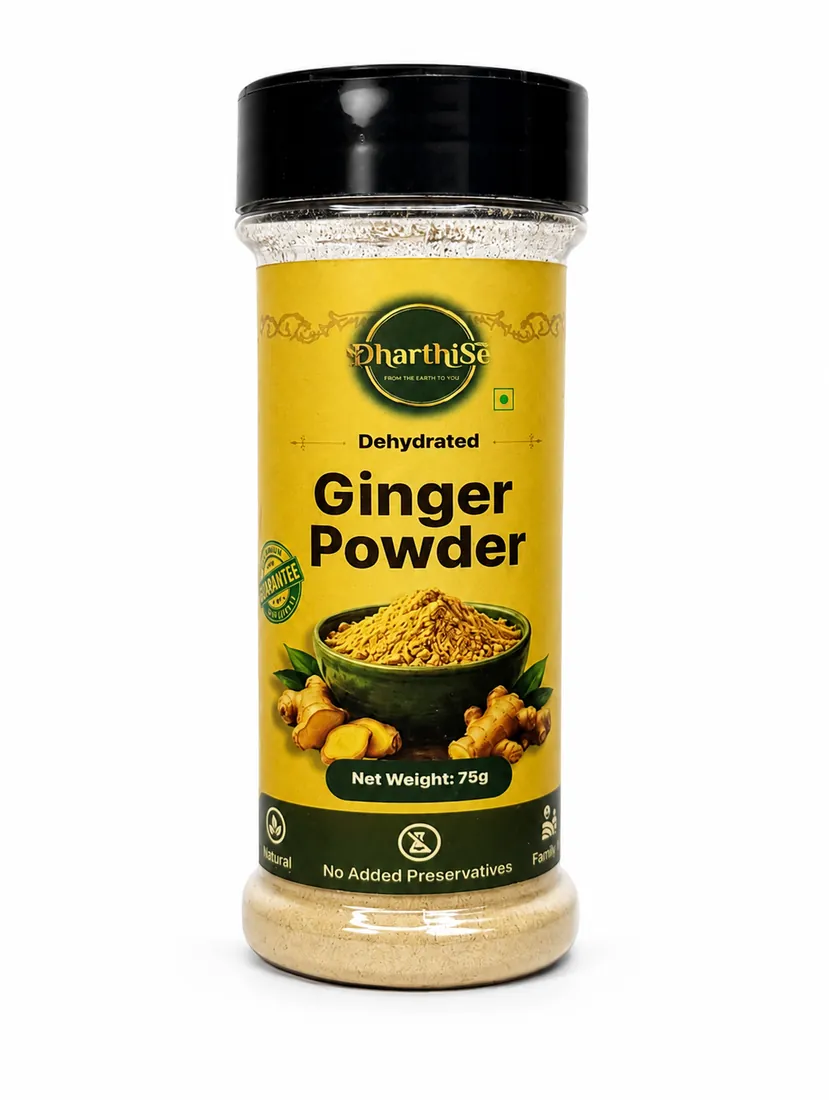
DharthiSe Dehydrated Ginger Powder is 100% natural dried ginger, finely ground, with no additives, no colour and no preservatives, and a COA per batch — just ginger, dried and milled for warm, concentrated flavour. The fastest way to taste it is in a dhaba-style masala chai: a single pinch and you have that comforting ginger warmth in every cup, traceable from the earth to you.