Guide
Dehydrated Vegetable Powders: The Complete Guide
8 min read
A complete guide to dehydrated vegetable powders — what they are, how they are made, their benefits, the main ones, and how to cook with them.
There is a category of jar that quietly transforms how a kitchen runs, and most people discover it almost by accident: dehydrated vegetable powders. Tomato, onion, garlic and ginger — the four ingredients you reach for every single day — concentrated into shelf-stable powders that never go soft at the back of the fridge, never need peeling or chopping, and rebuild into a gravy base in minutes. This is the complete guide to what they are, how they are made, why they work so well, and how to actually cook with them.
What dehydrated vegetable powders are
A dehydrated vegetable powder is simply a fresh vegetable with its water removed and the dried result milled to a fine powder. Removing the water concentrates everything that makes the vegetable worth using — the savour, sweetness, tang and colour — into a small, light, long-lasting form. A spoon of tomato powder carries the body and acidity of a fresh tomato; a spoon of onion powder carries the savoury depth of a browned onion, without the browning.
The best of them are honest: the only ingredient should be the vegetable itself, with no added colour, no fillers and no anti-caking agents. Read the label first — if it lists maltodextrin, starch, salt or colour, you are paying for vegetable diluted with something else.
How they are made
Good vegetable powders start with ripe, sound produce that is cleaned, then dried — either by traditional sun-drying or by controlled low-temperature dehydration — until the moisture is gently driven off. The dried pieces are then milled to a consistent fine powder, tested, and packed. The detail that matters most is heat: drying at the right, controlled temperature protects the natural colour, aroma and nutrition, where harsh high heat would dull all three.
India happens to be very good at this. Onion and garlic, for example, are grown in Madhya Pradesh and dehydrated in Mahuva, Gujarat — the country's dehydration hub — while tomatoes from belts like Kolar and Nashik are dried at ripeness to carry their colour into the powder. We cover the full process at /blog/how-dehydrated-spices-are-made.
Why they are worth keeping
- Zero waste — no soft, spoiling vegetables thrown out at the end of the week. You use exactly what you need.
- Long shelf life — sealed and dry, they keep for months in the pantry, no refrigeration needed.
- No peeling, chopping or tears — measure straight from the jar; no boards, no stinging eyes, no sticky fingers.
- Consistency — every spoon tastes and looks the same, unlike fresh produce that swings by season and ripeness.
- Speed — an instant gravy base or an even, all-through flavour with none of the slow bhuno step.
- Convenience for small kitchens — a few light jars replace bags of produce when fridge space or shopping is tight.
The main four
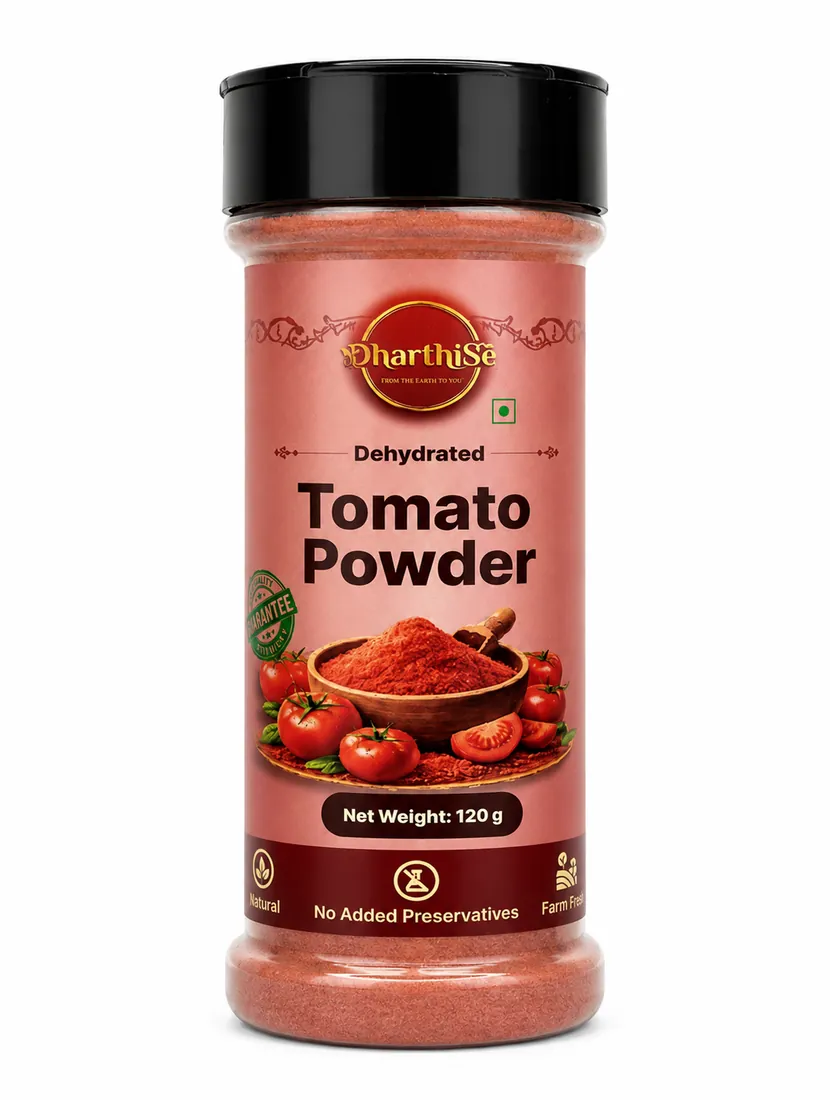
- Tomato powder — sun-dried ripe tomatoes, ground fine. A tangy, deep-red instant base for gravies, soups and seasonings. More at /blog/tomato-powder-uses.
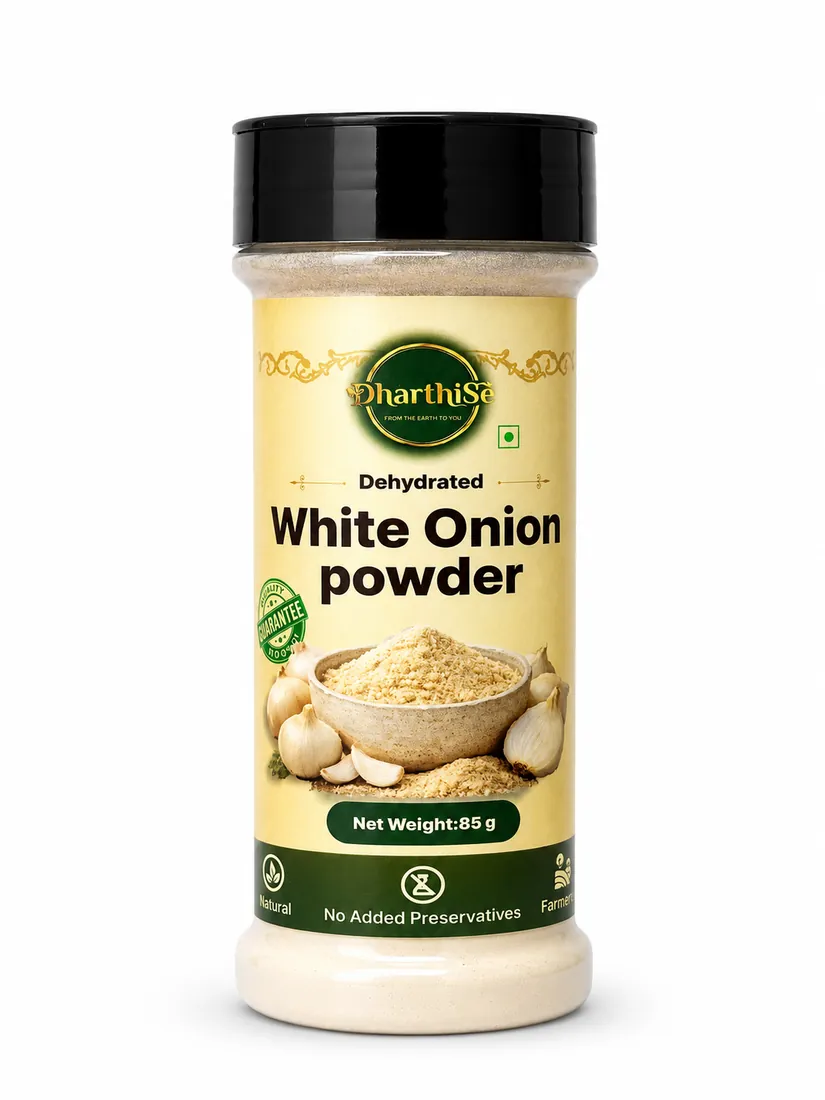
- White onion powder — milder, sweeter white onion, dried and milled for a clean savoury depth in gravies, dips and rubs, with zero tears.
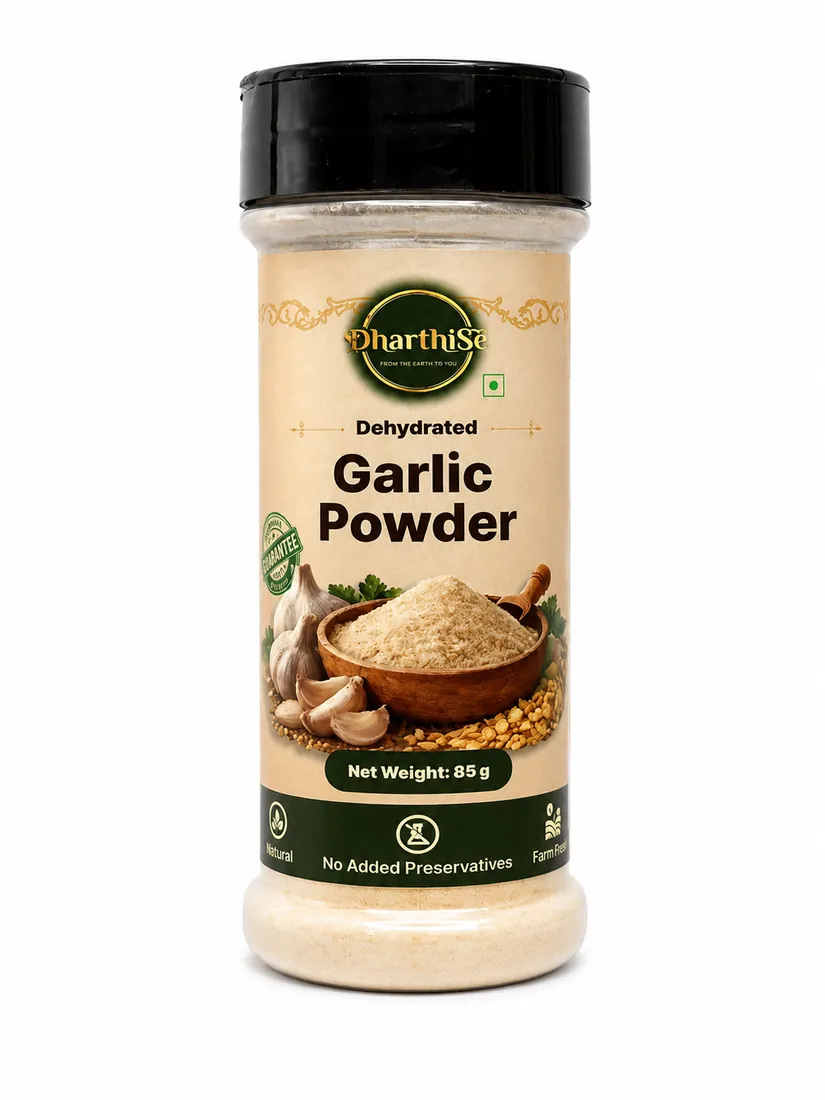
- Garlic powder — dehydrated garlic with the raw sharpness tamed into a rounder, even garlic note that shines in rubs, dressings and bakes. See /blog/garlic-powder-vs-fresh-garlic.
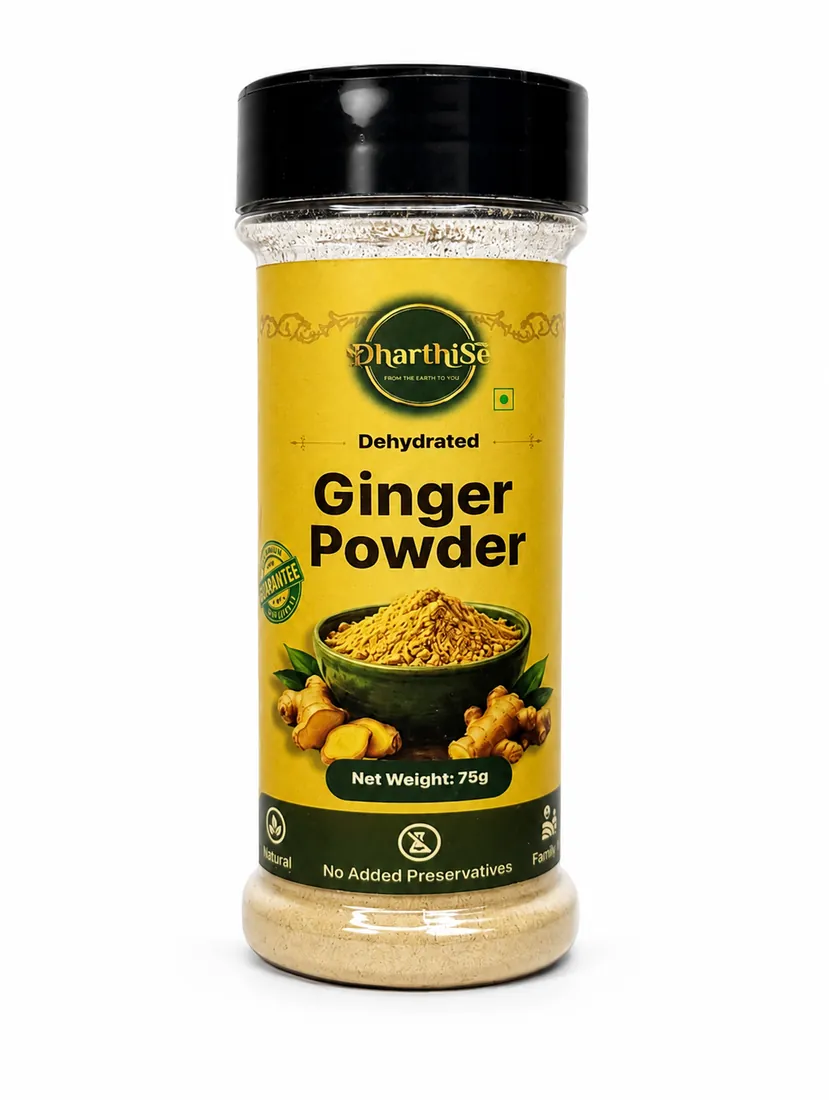
- Ginger powder (saunth) — dried ginger, warmer and more concentrated than fresh adrak, perfect for chai, kadha, baking and dry blends.
How to cook with them: rehydration basics
There are really only two ways to use these powders, and both are easy. You can use them dry — dusting tomato or peri-style seasoning over chaat, fries, popcorn or makhana, or mixing onion and garlic powder into a dry rub — where they season evenly and never leave wet, stray pieces. Or you can rehydrate them, whisking the powder into warm (not boiling) water to rebuild a smooth base in seconds.
A rough rule of thumb keeps you close: about a tablespoon of tomato powder in a quarter cup of warm water stands in for one medium tomato; about a quarter teaspoon of garlic powder for one clove; about a quarter teaspoon of saunth for a tablespoon of grated fresh ginger. Because the flavour is concentrated, always add gradually — it is easy to add more and impossible to take out. Our instant tomato gravy and no-tears onion gravy base show the technique in practice.
How DharthiSe makes them
Every DharthiSe vegetable powder is 100% natural — just the vegetable, dried and milled — with no added colour, no fillers, no anti-caking agents and no preservatives, and a COA per batch. The colour you see and the savour you taste are the vegetable's own, concentrated rather than faked. Browse the range at /products, and keep a few jars by the stove: less waste, less prep, and the same honest flavour every time, from the earth to you.