Guide
Best Turmeric (Haldi) in India: How to Choose High-Curcumin Turmeric
6 min read
A practical guide to picking the best turmeric in India — curcumin levels, GI-tagged Lakadong, what adulteration to avoid, and why a COA matters.
Turmeric is the one spice in almost every Indian kitchen, yet most of us choose it by colour and habit rather than by what is actually inside the jar. The single number that matters most — curcumin content — is the one almost never printed on the pack. This guide walks through what makes turmeric genuinely good, how to choose it, and the adulteration worth being careful about, so you can buy haldi that earns its place in your daily cooking and your evening glass of milk.
What actually makes turmeric "good"
The active compound in turmeric is curcumin — the curcuminoid responsible for its golden colour and most of the wellness interest around haldi. The more curcumin, the more potent and vivid the turmeric. This is where everyday turmeric and premium turmeric quietly part ways.
Most commercial turmeric powder sold in India tests at roughly 2–3% curcumin. It is perfectly fine for colour and everyday cooking, but it is a long way from the top of the range. Premium Lakadong turmeric, grown in the Jaintia Hills of Meghalaya, is famous precisely because independent testing puts its curcumin between about 7% and 12% — among the highest in the world — and it carries a GI (Geographical Indication) tag that ties the name to that region.
Other well-known growing belts sit in between. Turmeric from Erode and Salem in Tamil Nadu — Erode is often called the "Turmeric City" — typically lands around 3–4% curcumin, while Nizamabad in Telangana is another major trading and growing hub. None of these are "bad"; the point is simply that origin and curcumin level vary a lot, and knowing the range helps you read what you are paying for.
How to choose high-curcumin turmeric
You usually cannot taste curcumin percentage directly, so use these practical signals when you buy:
- High curcumin first. Look for turmeric that names a high-curcumin source (such as Lakadong) or states a tested curcumin level. A higher number means more colour and potency per spoon.
- No added colour. Good turmeric is naturally golden-orange. If the powder is an unnaturally bright, almost neon yellow, be suspicious — colour can be added to mask weak or diluted turmeric.
- Lab-tested, with a COA. A Certificate of Analysis (COA) per batch is the honest way to prove curcumin level and screen for contaminants. If a brand can show one, that is a strong signal.
- Aroma and feel. Real haldi has a warm, earthy, slightly peppery smell and stains your fingers a clean yellow. Flat or musty aroma suggests old or over-diluted stock.
- Fine, even mesh. A consistent fine grind blends smoothly into milk and gravies without grit or clumping.
The adulteration to avoid — and why a COA matters
Turmeric is, unfortunately, one of the more commonly adulterated spices, which is exactly why third-party testing is worth caring about. Two adulterants are flagged most often by food-safety bodies:
- Metanil yellow — an industrial, non-food synthetic dye sometimes used to fake a rich yellow colour. It is not permitted in food.
- Lead chromate — a brightening adulterant that has been documented in some turmeric supply chains and is a serious contaminant.
You cannot reliably eyeball either of these at home, and the usual kitchen "tests" are crude at best. The dependable safeguard is documentation: a Certificate of Analysis for the batch you are buying. A COA is the difference between a brand telling you the turmeric is pure and a brand showing you. That is the whole reason we publish quality details rather than ask you to take colour on trust.
How DharthiSe turmeric is made
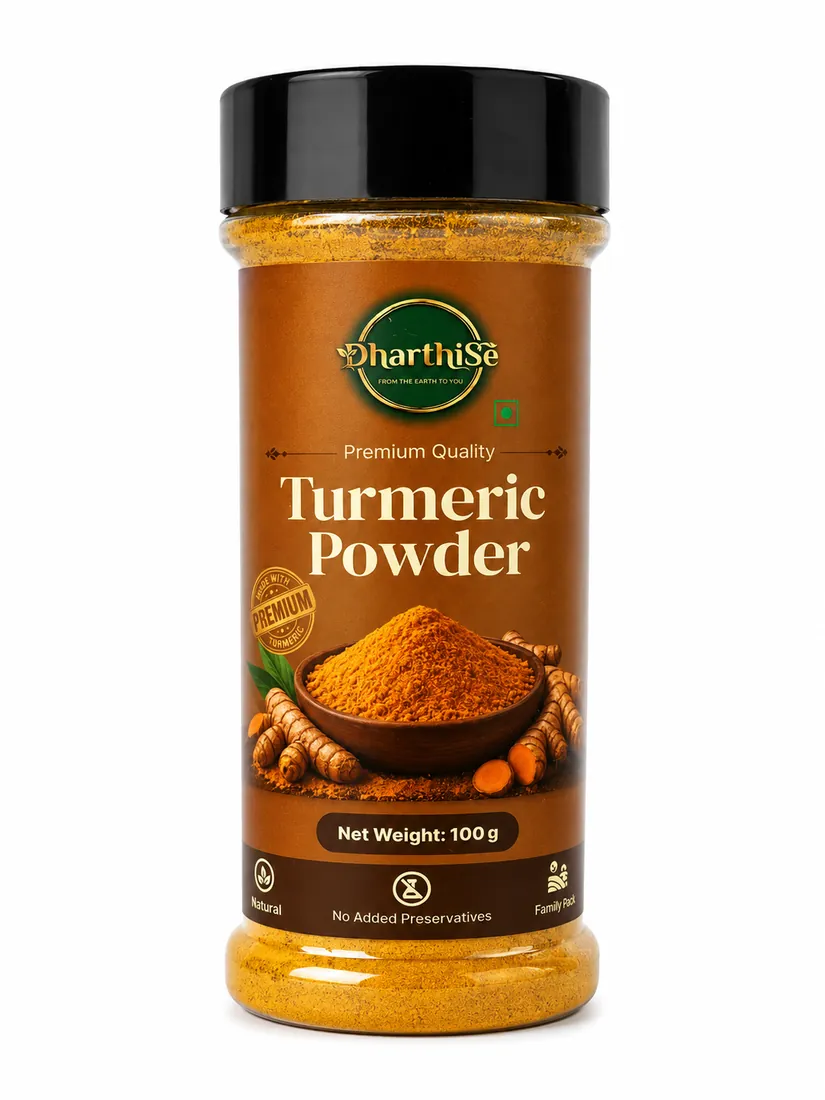
DharthiSe Turmeric Powder (Haldi) is a high-curcumin haldi sourced from Lakadong in Meghalaya, with no added colour and a COA per batch. It is free from additives and preservatives — just turmeric, ground fine to the bright golden colour and warm, earthy aroma that haldi is meant to have. You can read the batch-level quality story on our quality page.
How to use it every day
A high-curcumin turmeric rewards small, regular use more than occasional big doses. A pinch goes into dal, sabzi and rice for colour and that grounding earthy note. In the evening, it becomes haldi doodh — warm turmeric milk with a pinch of black pepper, which helps your body absorb the curcumin. Our golden haldi doodh recipe puts the whole thing together in about five minutes.
Choose turmeric the way you would choose any ingredient you eat daily: by what is inside it, not just its colour. Pick a high-curcumin source, insist on no added colour, and look for a COA — and a jar of haldi quietly becomes one of the best-value upgrades in your kitchen.