Guide
Red Chilli Powder: Uses & How Much to Add
6 min read
How to use red chilli powder and how much to add — controlling heat, colour vs heat, tadka, marinade and sprinkle uses, plus practical seasoning tips.
Red chilli powder is the spice most likely to make or break a dish — and the one most of us add by reflex rather than judgement. A little too much and the whole pot is on fire; a little too cautious and everything tastes flat. Lal mirch is also the spice where colour and heat get confused, leading people to either fear it or overdo it. This guide is about using it with control: how much to add, how to separate colour from heat, and the everyday ways to put red chilli powder to work.
Colour is not the same as heat
The single most useful thing to understand about chilli powder is that its redness and its spiciness are two different qualities. Heat comes from capsaicin and is measured on the Scoville scale (SHU); colour comes from natural red pigment and is measured by ASTA value. The hottest chillies are not always the reddest, and some of the reddest are quite mild.
This is why a deep-red gravy is not necessarily a fiery one, and a pale dish can still pack heat. Guntur chilli from Andhra Pradesh, for instance, brings both genuine heat and a clean bright red, while milder, deep-red profiles exist for colour-forward cooking. We go variety by variety — Guntur, Byadgi and Kashmiri — at /blog/best-red-chilli-powder-in-india, which is worth a read if you want to choose by dish.
How much to add — and how to control heat
There is no single right amount, because chillies vary in strength and so do palates. The reliable method is not a fixed teaspoon count but a way of working:
- Start low, build up — add about half what you think you need, taste, and increase. It is easy to add more chilli and impossible to take it out.
- Know your powder — a hot Guntur-style chilli needs a lighter hand than a mild, colour-forward one. The same spoon does very different things depending on the variety.
- Separate the jobs — if you want a dish to look richly red without being fierce, use a milder colour chilli for looks and a small pinch of a hotter one for warmth, rather than piling on one powder and getting both at full blast.
- Bloom it in oil — adding chilli to warm oil or a tadka draws out colour and rounds the heat, but watch the heat of the pan; chilli scorches fast and turns bitter if the oil is too hot.
- Balance, do not just subtract — if a dish tips too hot, a little coriander powder, cream, curd or a touch of sweetness pulls it back without dulling the flavour.
Everyday ways to use red chilli powder
- Tadka — a pinch in the hot oil tempering for dal or sabzi gives colour and a warming kick; add it off the highest heat so it blooms rather than burns.
- Marinades — chilli powder is central to tandoori and tikka bases, lending heat and a red glow; our tandoori marinade builds around exactly this.
- Gravies and curries — stirred into onion-tomato bases for all-through warmth and colour; add early so the heat integrates.
- Sprinkle and finish — a light dusting over chaat, eggs, grilled corn or snacks for an instant lift.
- Pickles and preserves — fiery achaars lean on a hot, bright chilli for both heat and that signature red.
- Dry rubs — fold into spice rubs for paneer, chicken or vegetables for an even, all-over warmth.
- Spice blends — a component of homemade garam masala, chaat masala and many regional masalas.
A few practical tips
Two small habits make chilli powder far easier to handle. First, respect the pan temperature: chilli added to very hot oil scorches in seconds and turns acrid, so temper it on gentler heat or stir it into liquid. Second, taste in stages — chilli heat builds as a dish simmers and as it sits, so a curry that seems perfect off the stove can feel hotter twenty minutes later. Season for where the dish is going, not just where it is now.
How DharthiSe red chilli is made
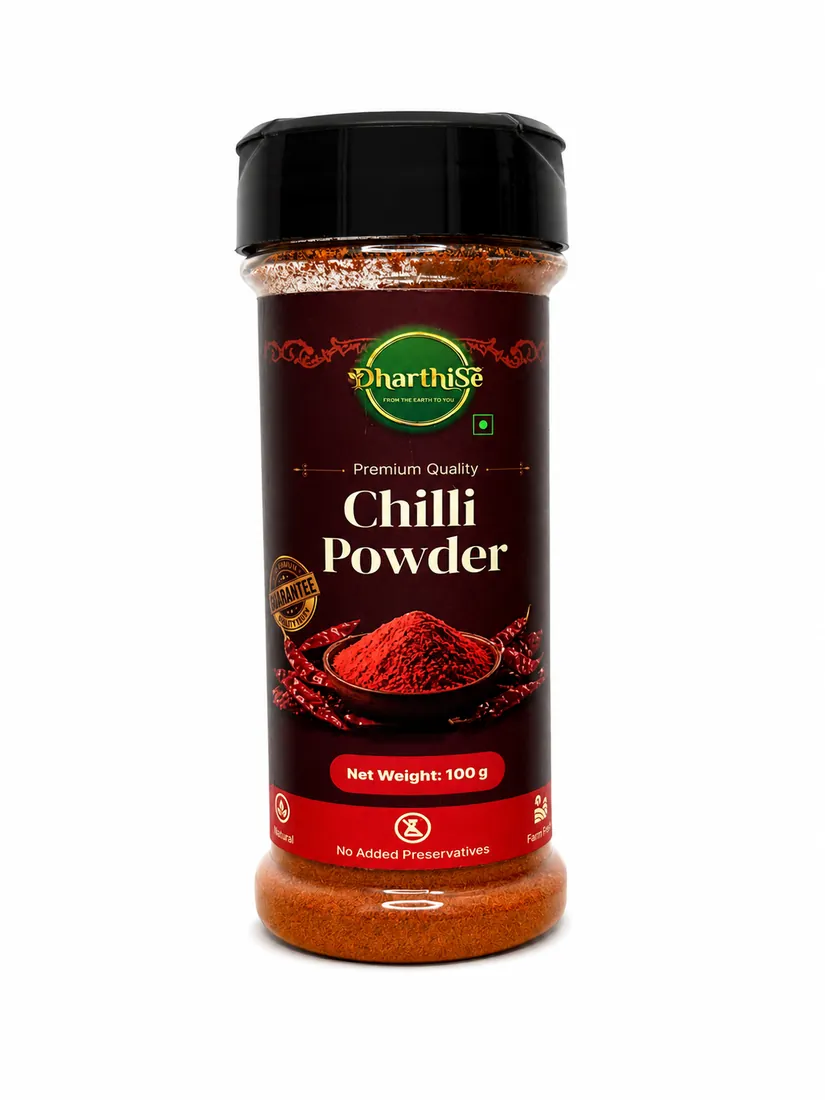
DharthiSe Red Chilli Powder is 100% natural Guntur chilli — bright red and genuinely hot — with no added colour, no fillers and no preservatives, and a COA per batch. The colour you see is the chilli's own, never dyed, which matters because deep red is exactly what adulterators fake. Whether you are tempering a tadka or building a tandoori marinade, you control the heat and the colour you see is real, traceable from the earth to you.