Guide
How Dehydrated Spices & Vegetable Powders Are Made
7 min read
How dehydrated spices and vegetable powders are made — harvest, cleaning, sun-drying or low-temperature dehydration, milling, testing and packing.
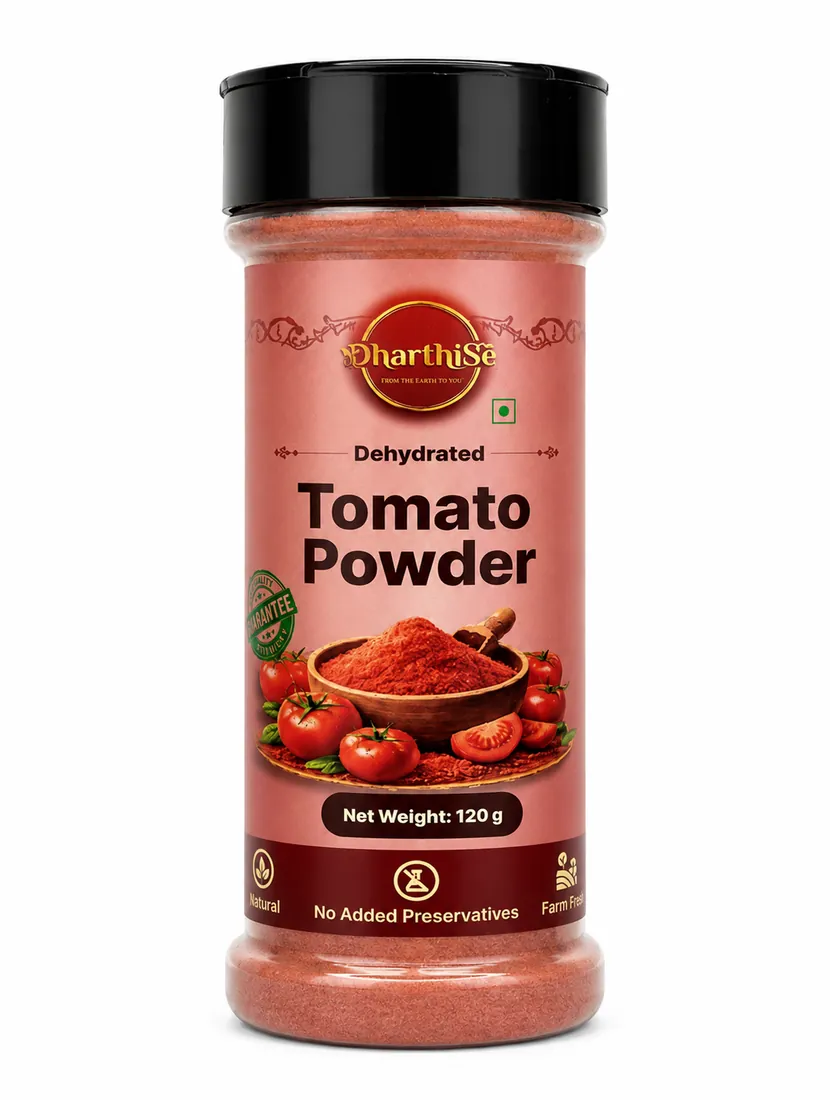
A jar of bright tomato powder or fragrant haldi looks simple, but a surprising amount of careful work stands between a field and that finished powder. Get the process right and you capture the colour, aroma and goodness of fresh produce in a shelf-stable form; get it wrong — especially the drying — and you end up with something dull, dusty and lifeless. This is a plain-language walk through how dehydrated spices and vegetable powders are actually made, step by step, and why one stage in particular makes or breaks the result.
Step 1: Harvest and sourcing
It starts in the field, and the field sets the ceiling. A powder can only be as good as the raw material going into it, which is why sourcing from the right growing belts matters so much — high-curcumin turmeric from Lakadong in Meghalaya, Guntur chilli from Andhra Pradesh, coriander from the Kota belt in Rajasthan, onions and garlic grown in Madhya Pradesh, tomatoes from Kolar and Nashik. Harvesting at the right ripeness ensures the produce carries its full colour and flavour into everything that follows.
Step 2: Cleaning and preparation
Once harvested, the raw material is cleaned and sorted — removing dirt, stones, stalks, damaged pieces and any foreign matter. Depending on the produce, this stage may include washing, grading and cutting or slicing to a size that will dry evenly. This is unglamorous but essential work: it is where hygiene and consistency begin, and where poor produce gets sorted out before it can contaminate a good batch.
Step 3: Drying — the stage that matters most
Drying is the heart of the whole process, and there are two broad approaches. Traditional sun-drying uses natural heat, long valued for spices and certain produce. Controlled low-temperature dehydration uses gentle, regulated warmth to drive off moisture steadily without cooking the product.
The crucial point is heat. Drying at the right, controlled temperature protects three things that harsh high heat would destroy: colour, which is why a well-dried tomato powder stays deep red rather than browning; aroma, the delicate, volatile oils that make coriander citrusy and ginger warm; and nutrition, the heat-sensitive compounds that high temperatures degrade. Low-and-slow is more careful and more demanding than blasting produce with heat — and it is exactly what separates a vivid, fragrant powder from a flat one.
Step 4: Milling
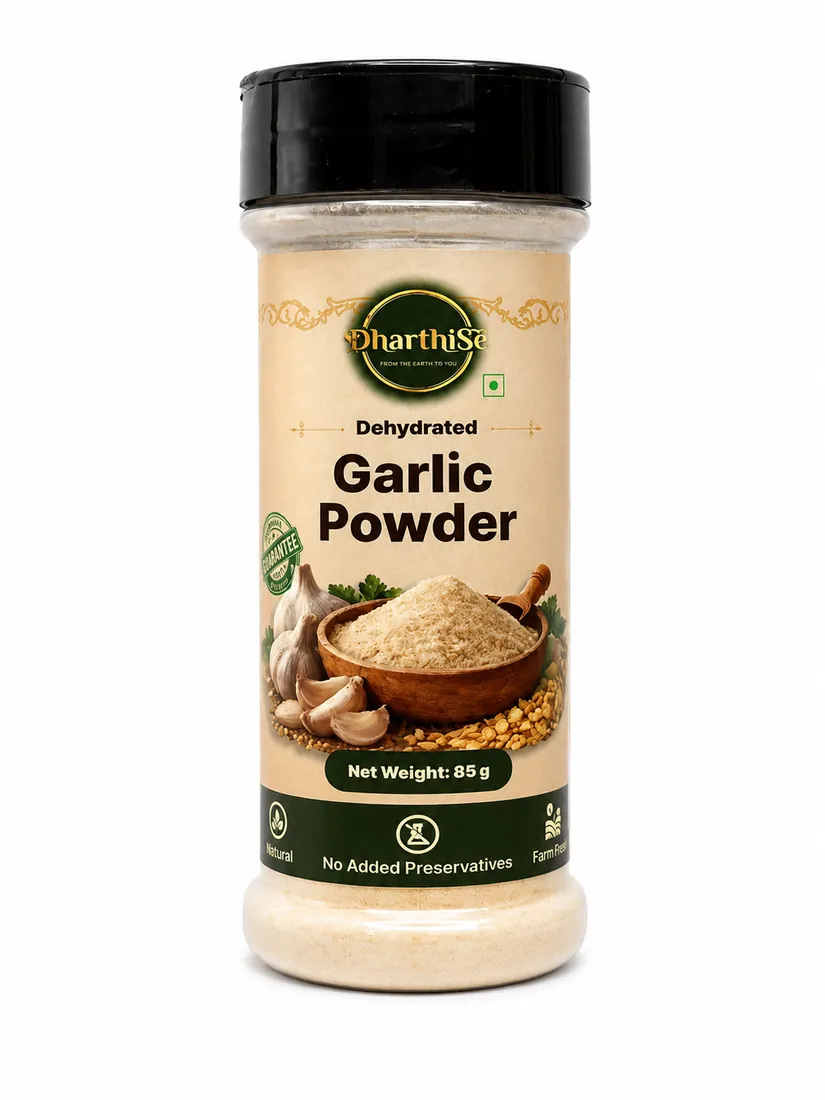
Once the produce is dried to the right moisture level, it is milled — ground to the required fineness. Grind consistency matters more than people realise: a fine, even mesh blends smoothly into milk, gravies and dressings without grit or clumping, while an inconsistent grind behaves unpredictably. Different products are milled to different textures on purpose, which is why, for example, garlic comes as both a fine powder and a coarser dehydrated style for when you want a little more texture.
Step 5: Testing
Before anything is packed, it is tested. This is where a Certificate of Analysis (COA) is generated for the batch — confirming the product is genuine, checking moisture and microbial results, and screening for adulterants and contaminants against permitted limits. Testing per batch is what makes purity provable rather than assumed; the full story of what a COA covers is at /blog/what-is-coa-certificate-of-analysis. This stage is the difference between a brand telling you a powder is pure and a brand showing you.
Step 6: Packing
Finally, the tested powder is packed and sealed to protect it from moisture, light and air — the three things that fade aroma and shorten shelf life. Good packing is why a sealed jar keeps for months in the pantry while an exposed powder goes flat. From here, the batch — traceable back through testing, milling, drying and sourcing — is ready to reach your kitchen.
Why the process is the product
Every one of these stages is a chance to cut a corner — source cheaper produce, dry too hot to save time, skip the testing. The reason a powder can be honestly described as 100% natural, with no added colour, no fillers and no preservatives, is that the colour and flavour were protected through careful drying rather than faked back in afterwards. That is the whole philosophy behind how we make ours, and you can read the batch-level quality story on our "See the Source" page at /quality.
When the process is done right, nothing needs to be added — the powder simply carries the colour, aroma and goodness of the original produce, concentrated and preserved. From the earth to you.