Guide
Garlic Powder vs Fresh Garlic: When to Use Which
5 min read
When to use garlic powder vs fresh garlic — flavour, convenience, a simple conversion (¼ tsp ≈ 1 clove), best uses for each, and what additives to avoid.
Fresh garlic and garlic powder are often treated as rivals, with powder cast as the lazy substitute. That misses the point: they are two tools for two different jobs. Fresh garlic is unbeatable in some places, and garlic powder quietly wins in others. Once you know which job each is built for, you stop "settling" and start choosing — and your cooking gets both easier and more consistent.
How they differ in flavour and texture
Fresh garlic is sharp, pungent and a little hot when raw, mellowing into something sweet and nutty as it cooks. It brings moisture, little soft bits of texture, and that unmistakable just-crushed bite. It is alive and aromatic — but also fiddly, and its raw punch can dominate.
Garlic powder is dehydrated garlic, ground fine. Drying tames the raw sharpness and gives a rounder, mellower, more even garlic flavour that disperses uniformly. It carries no moisture and no texture of its own, which is exactly why it behaves so well in dry rubs, dressings and bakes where you do not want wet, chopped pieces.
The convenience case for garlic powder
Most of the time the choice comes down to practicality, and this is where powder shines:
- No peeling or chopping — measure straight from the jar; no sticky fingers, no board to wash.
- No lingering smell — garlic powder does not leave your hands and kitchen smelling for hours.
- Even distribution — it coats every piece in a rub or every drop of a dressing, instead of clumping into hot spots of raw garlic.
- Long shelf life — sealed and dry, it keeps for months in the pantry with no sprouting or going soft.
- No waste — you use exactly what you need, with no half-heads drying out in a basket.
- Won't burn as easily — fine powder blends in rather than scorching the way chopped garlic can in a hot pan.
A simple conversion
You do not need to be exact, but a rough rule keeps you out of trouble: about ¼ teaspoon of garlic powder stands in for roughly one clove of fresh garlic. Start at the lower end, taste, and add more — powder is concentrated, so it is easy to over-do. When you are adding it to a dry rub or a dressing, sprinkle and mix rather than dumping it in one spot, so it disperses evenly.
When to use which
- Use fresh garlic for: a sizzling tadka, slow-cooked gravies and bases, roasted whole cloves, and anything where you want that raw, pungent, just-crushed hit.
- Use garlic powder for: dry rubs and spice blends, salad dressings and dips, garlic bread and bakes, marinades, popcorn and fries seasoning, and quick weeknight cooking where you want even garlic flavour with zero prep.
- Use both: many cooks build the base with fresh garlic and finish with a little powder for an even, all-over garlic note.
What to avoid in a garlic powder
Not all garlic powder is just garlic. Cheaper powders are sometimes cut with fillers or loaded with anti-caking agents and other additives to keep them free-flowing. Read the label: ideally it should say garlic, and nothing else. The flavour of a pure powder is noticeably cleaner and more garlicky than one padded out with starch or salt.
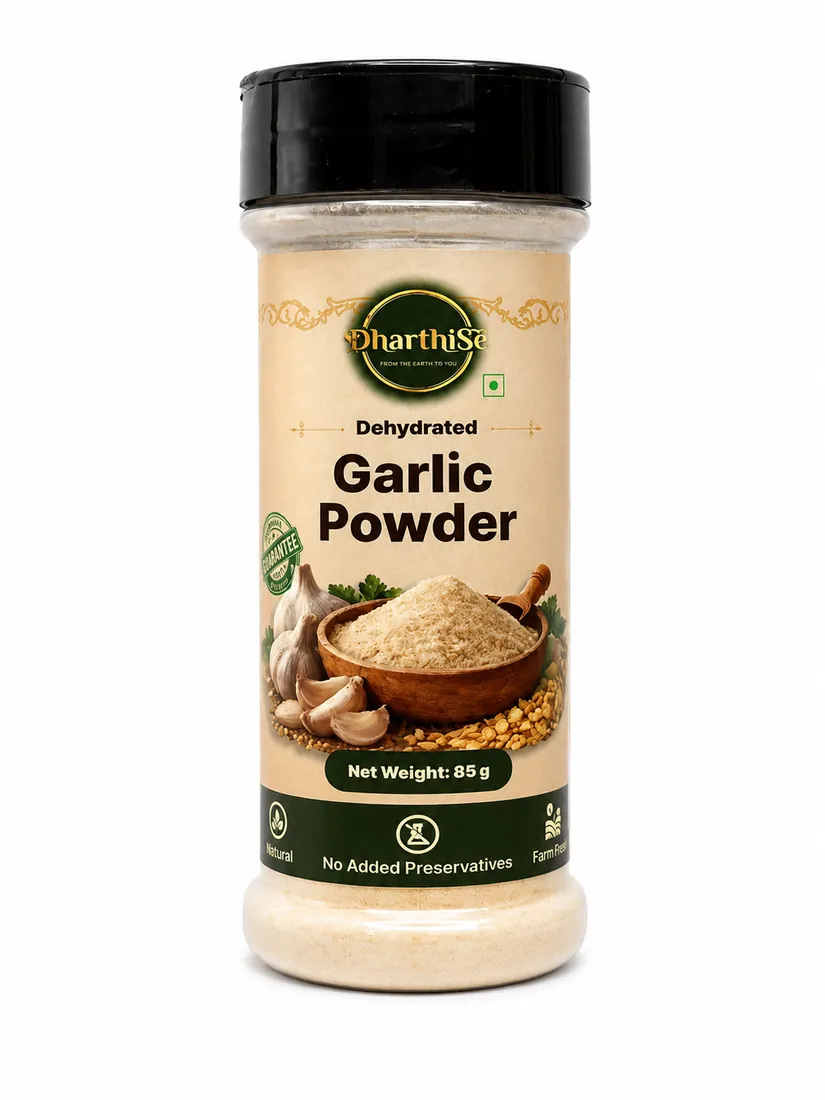
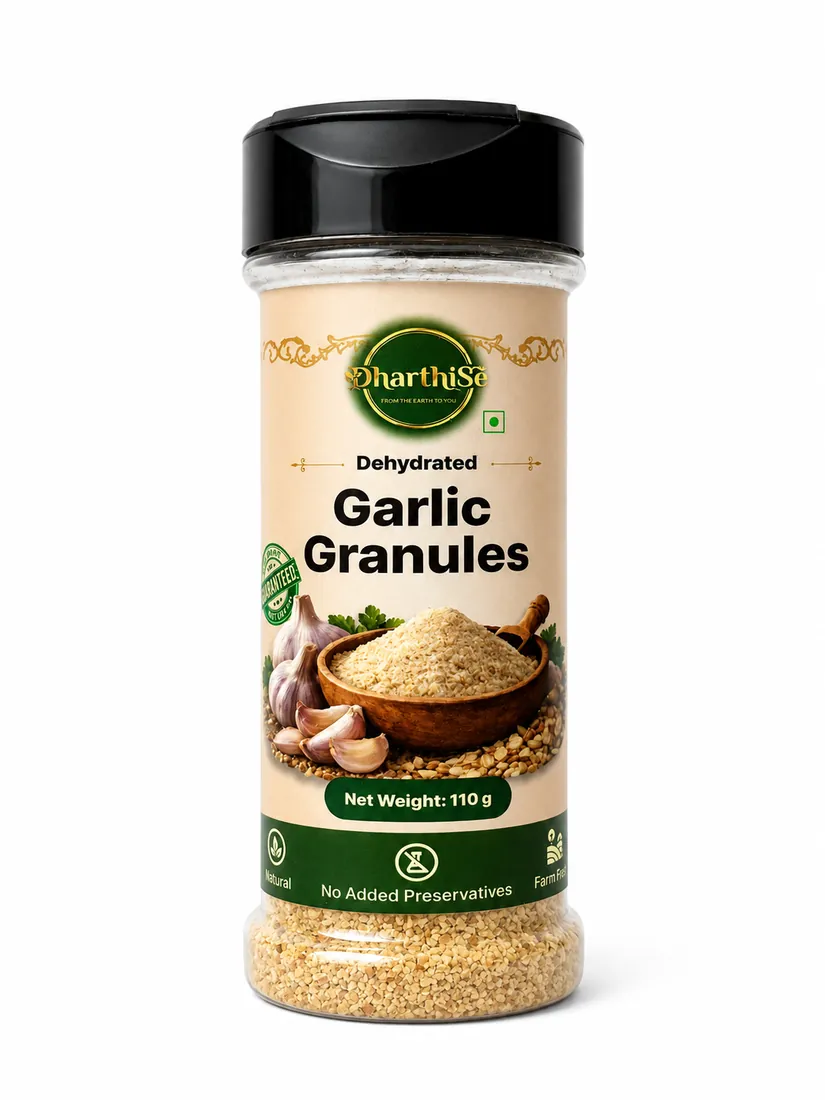
DharthiSe garlic is grown in Madhya Pradesh and dehydrated in Mahuva, Gujarat — India's dehydration hub — with no additives, no anti-caking agents and no preservatives, and a COA per batch. It is simply garlic, dried and ground, available as both a fine garlic powder and a coarser dehydrated style for when you want a bit more texture.
Try it tonight
The easiest way to feel the difference is our 5-minute garlic bread, where powder gives an even, all-over garlic flavour that you simply cannot get by rubbing a clove across a slice. Keep a jar by the stove and fresh garlic in the basket, use each for the job it is best at, and you get the best of both — clean, traceable garlic flavour, from the earth to you.